
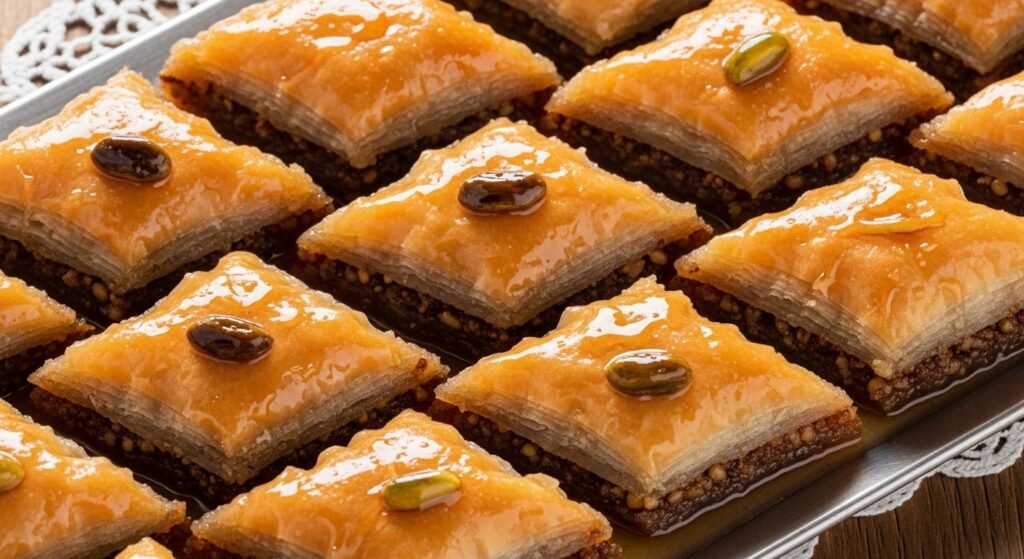


You’ll find Greek baklava sweet because of the concentrated syrup and the spiced nut filling, and flaky because of how thin, buttered phyllo layers separate and crisp in the oven. The balance of a syrup soaked with honey or sugar and well-toasted nuts pressed between many brushed phyllo sheets creates that signature combination of syrupy sweetness and crunchy, airy flakiness.
As you move through the article, you’ll explore what defines authentic Greek baklava, which ingredients actually drive sweetness, how technique produces delicate flakes, and why syrup timing and baking choices change the final texture and flavor. Expect practical details you can use in your own kitchen and a few modern twists that keep this classic dessert lively.
What Defines Greek Baklava

Greek baklava balances crisp, buttered phyllo, a warmly spiced nut filling, and a honey-lemon syrup to create a dessert that is both flaky and sweet. Expect thin, layered pastry, coarsely chopped walnuts with cinnamon, and a syrup that soaks without becoming soggy.
Recommended Products

🥐 Ultra Thin & Delicate Layers: Paper-thin phyllo sheets create perfectly crispy, flaky layers ideal for authentic baklava and traditional pastries

Each Puff Pastry sheet is made up of many delicate layers, essential to creating its supremely light, airy texture
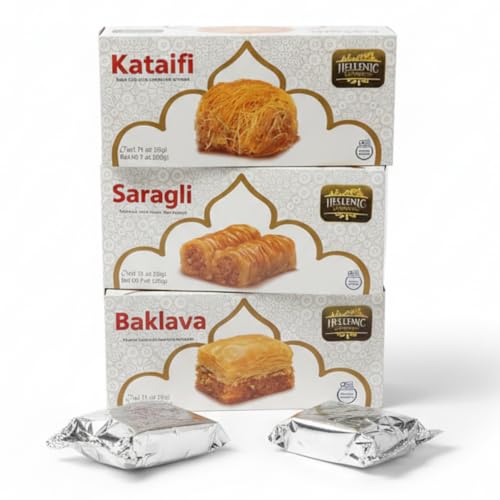
Handmade Greek Pastries – Authentic Mediterranean dessert assortment featuring Baklava, Kataifi, and Saragli, crafted in Greece with traditional recipes.
Historical Origins
You trace Greek baklava’s modern form to the eastern Mediterranean and Ottoman culinary exchange, where layered pastry techniques evolved over centuries. Greeks adapted these techniques, emphasizing local ingredients like walnuts and thyme honey, which shaped the flavor profile you recognize today.
Regional practices influenced shape and service: Greeks commonly cut baklava into diamonds or squares and serve it at celebrations and coffee houses. Written Greek cookbooks from the 19th century show recipes resembling today’s versions, confirming continuity rather than sudden invention.
Iconic Ingredients
Phyllo dough defines texture: you need paper-thin sheets brushed with plenty of melted butter or clarified butter to achieve crisp, separating layers. Walnuts are the typical Greek choice; you’ll find them coarsely chopped and mixed with ground cinnamon and sometimes clove for warmth.
Syrup combines honey, sugar, water, and a splash of lemon; the lemon keeps the syrup from crystallizing and adds subtle brightness. Some recipes add a bay leaf or orange peel while boiling to layer aromatic nuance. Use high-quality honey and fresh nuts for the most authentic taste.
Traditional Preparation Techniques
You layer dozens of phyllo sheets, brushing each with butter to ensure distinct, shattering layers after baking. Spread the nut mixture evenly and press gently to compact it, which helps the pastry cut cleanly into diamond shapes before baking.
Bake until the top is deep golden, then pour cooled or lukewarm syrup over hot pastry so the syrup is absorbed without collapsing the layers. Rest the baklava at least several hours—ideally overnight—so the syrup distributes and the texture settles into the characteristic balance of sticky sweet and crisp flake.


Key Ingredients For Sweetness
Sweetness in Greek baklava comes from a precise mix of syrup, honey, and the natural sugars in the nuts, while spices and citrus peel shape the aroma. Proper syrup consistency and nut selection determine both the immediate sweetness and the lingering, balanced aftertaste.
Recommended Products

Our walnuts are high in unsaturated omega-3 fatty acids, iron, and B vitamins!

🎁 READY TO GIFT: Elegantly ribbon-wrapped gift box arrives ready to give — ideal for birthdays, holidays and special occasions.

Baklava Walnut: Flaky, buttery layers of phyllo dough filled with premium walnuts for a satisfying experience of a nut-forward flavor and light sweetness
Types of Sweeteners Used
You’ll most commonly use honey and a sugar-based syrup in Greek baklava. Honey provides floral complexity and a thick mouthfeel; use a mild-flavored Greek or wildflower honey for authentic character.
White granulated sugar mixed with water creates a simple syrup that adds clean sweetness and controls moisture. Boil sugar and water until the syrup reaches a light thread (about 220–230°F or 105–110°C) for a balanced viscosity.
Some recipes blend honey and sugar syrup to get both flavor and texture. Adding a splash of lemon juice to the syrup prevents crystallization and brightens the sweetness. Use 1 part honey to about 1–1.5 parts sugar syrup depending on how pronounced you want the honey note.
Role of Nuts in Flavor
Nuts supply natural sugars, oils, and texture that interact with the syrup to create the classic baklava bite. Pistachios give a grassy, slightly sweet profile and a green color. Walnuts contribute a warm, robust bitterness that deepens sweetness.
You can mix nuts (common ratio 50–50 or 60–40) to balance flavor and mouthfeel. Finely chop nuts so they pack evenly between phyllo layers and expose more surface area to the syrup, which improves infusion and sweetness perception.
Toasted nuts intensify flavor by releasing oils and caramelized notes. Light, even toasting (5–8 minutes at 350°F / 175°C) enhances aroma without adding bitterness. Salt the nut mix lightly—about 1/8 to 1/4 teaspoon per cup—to heighten contrast and make the sweet elements pop.
Balancing Spices and Aromatics
Spices and aromatics should support, not mask, the sweet core. Ground cinnamon is the classic choice; use 1/2 to 1 teaspoon per cup of nuts for warm depth. Cloves, allspice, or cardamom work in tiny amounts (1/8 to 1/4 teaspoon) if you want complexity without overpowering the honey.
Citrus zest—lemon or orange—adds a bright, acidic lift that sharpens perceived sweetness. Use about 1 teaspoon of finely grated zest per batch. A small splash (1–2 teaspoons) of rosewater or orange blossom water in the syrup adds floral top notes; avoid overuse, as these flavors can become soapy when excessive.
Always taste your nut-spice mixture before assembling. Adjust spice levels incrementally; less is usually better because the syrup’s sweetness will amplify any strong aromatics.


Creating the Flaky Texture
You’ll get crisp, separated layers by controlling dough quality, fat distribution, and precise layering technique. Small changes in phyllo handling, butter temperature, and the number of sheets between nut layers make the biggest difference.
Recommended Products

NATURALLY FLAVORED: Each bottle provides only pure, naturally flavored honey for a clean taste

HANDCRAFTED BY BARTENDERS: Created by bartenders for bartenders. Tippleman’s is a series of cocktail syrups that help easily introduce complex flavor characteristics into cocktails and beyond. Handcrafted by bartenders and bottled in Charleston, SC. Makes about 17 cocktails.

Made with Organic Honey
Phyllo Dough Characteristics
Phyllo must be paper-thin, pliable, and evenly dried to create the signature flake. Use commercially made phyllo labeled “filo” or “phyllo” with consistent sheet thickness; frozen blocks thawed overnight in the refrigerator perform reliably. Avoid brittle or damp sheets—brittle sheets tear and produce gaps, damp sheets stick and steam instead of crisping.
Work quickly to keep sheets from drying out. Cover stacked sheets with a slightly damp kitchen towel while you layer to maintain flexibility. Also check ingredients: higher-gluten flour in some brands gives slightly stronger sheets, while lower-fat formulations will brown and crisp faster.
Butter Quality and Application
Use unsalted butter for flavor control and a high milk-fat content (82%+). Clarified butter or a mix of clarified and whole butter reduces sogginess because it contains fewer milk solids that can burn. Melt butter to a pourable consistency but not scalding; warm butter spreads evenly without tearing phyllo.
Apply butter with a silicone brush or pour from a small spouted pitcher to ensure thin, consistent layers. Aim for a thin film—about 5–8 g per sheet for standard 9×13 pans—so layers separate and brown without becoming greasy. Brush edges and corners well to prevent dry spots that crack during baking.
Layering Methods
Layering controls how steam escapes and how the nuts contact phyllo, which defines flakiness. Start with a base of 6–8 buttered sheets to protect the bottom. Between nut fillings, place 2–4 buttered sheets depending on how pronounced you want layering; fewer sheets yield a denser nut-to-phyllo ratio, more sheets increase separation and crispness.
Cut the assembled tray into diamonds or squares before baking to let steam and syrup pathways form. Press the top layer lightly with the back of a spoon so butter soaks evenly but avoid compressing layers together. Bake until the top is deep golden and the interior registers flaky separation when tested with a fork.
The Art of Syrup Infusion
Master the syrup’s temperature, thickness, and flavoring to achieve syrup that soaks evenly without making the pastry soggy. Precision in timing, simple sugar-to-water ratios, and targeted aromatics produce consistent, honeyed crunch.
Recommended Products

Trader Joe's Clarified Butter (Ghee) (2 - 8 oz Jars)
Timing of Syrup Pouring
Pour syrup when the baklava is hot from the oven and the syrup is warm but not boiling. Hot pastry opens the phyllo’s layers; warm syrup penetrates those layers without collapsing crispness.
Allow the baked baklava to rest 5–10 minutes on the cooling rack before pouring if your syrup is near boiling. If syrup cools below lukewarm, it will not absorb well and leaves the top dry. Aim for a temperature difference: pastry ~200–220°F (93–104°C) and syrup ~110–130°F (43–54°C) works well for even absorption.
Pour slowly and evenly in a thin stream across the surface, following pre-cut lines so syrup sinks into each piece. Avoid pooling; dab any excess from edges with a spoon to keep the bottom from getting soggy.
Proportions and Consistency
Use a basic syrup ratio of 2:1 sugar to water for a stable, viscous syrup that clings to layers. For honey-based syrup, mix 1 part honey to 1 part water and reduce gently; then combine with a 2:1 sugar syrup for balance if you want stronger honey character.
Target a syrup consistency similar to light pancake syrup: thin enough to soak in but thick enough to coat nut granules. Test by dripping: the syrup should form a steady ribbon that blends back within 2–3 seconds.
Add 1–2 teaspoons lemon juice per 2 cups syrup to prevent crystallization and brighten flavor. Cool the syrup to the warm range before pouring, and reheat gently if it thickens too much; avoid boiling after adding honey to prevent bitter notes.
Flavor Infusion Techniques
Infuse syrup with whole spices and citrus peel during the simmering stage to extract clear aromas without clouding the syrup. Use cinnamon sticks, a split vanilla bean, or a strip of lemon peel; strain before bottling.
Keep additions subtle: 1 cinnamon stick or 1 teaspoon crushed cardamom pods per 2 cups syrup prevents overpowering the nuts. Add a tablespoon of quality orange blossom or rose water off the heat for floral notes, adding it after straining to preserve delicate aroma.
For a pure honey-forward profile, replace up to half the sugar with a robust, flavor-forward honey and reduce simmering time. Taste and adjust: small amounts of spice or citrus can lift the honey and walnut profile without masking the pastry’s nuttiness.


Baking Process and Its Impact
Proper oven temperature and timing control how the phyllo browns and how the syrup soaks in. The right balance produces crisp, golden layers and a syrup that penetrates without making the pastry soggy.
Recommended Products

✅ Durable Food-Grade Aluminum: Our Aluminum Half Sheet Baking Pan is made from high-quality, rust-free aluminum. It is easier to bake and roast cookies, vegetables, and cakes.

"This cookie sheet's unique diamond texture ensures crispy results and easy release

QUALITY BAKEWARE: The Alpine Cuisine baking round tray is made of high-quality pure aluminum material, with no extra coatings to flake off, no more plastic in your food, and healthy for baking, this is a great alternative to aluminum. The surface of pizza plates is resistant to staining, corrosion, and abrasion. Excellent substitute for wooden trays and unhealthy coating pans.
Optimal Baking Temperatures
Bake Greek baklava at 175–180°C (350–355°F) for even browning without burning the thin phyllo. This temperature lets the butter in each sheet render slowly and the nut filling toast, producing flavor without rapid moisture loss that causes toughness.
If your oven runs hot, lower the temperature by 10–15°C (20–25°F) and extend baking time by 5–10 minutes; this prevents dark edges while allowing interior layers to set. Use an oven thermometer to confirm actual oven temperature rather than relying on the set dial.
Place the pan on the middle rack to promote uniform air circulation. If the top browns too fast, tent loosely with foil for the last 10–15 minutes while the center finishes.
Achieving Proper Crispness
Crispness comes from thorough drying of the phyllo during baking and controlled syrup application. Brush each phyllo layer with melted butter or clarified butter so sheets separate and crisp; skip excess liquid between sheets.
Cut baklava into portions before baking to let moisture escape from the edges and to create defined layers. After baking, let the tray cool 10–15 minutes then pour warm syrup evenly over the hot pastry; this timing ensures syrup soaks into the nut layers while outer sheets remain crisp.
If syrup cools too much or you pour it too early, layers will soften. To revive slightly limp baklava, reheat uncovered at 150°C (300°F) for 5–7 minutes to re-crisp the top before serving.
- Key temperature numbers: 175–180°C (350–355°F), reduce by 10–15°C if needed.
- Timing notes: middle rack; cut before baking; pour syrup after 10–15 minutes cooling.

Serving and Presentation
Serve baklava at room temperature so the layers stay crisp while the syrup remains slightly tacky. Cooling for at least 2 hours after syruping helps the flavors meld without soggy phyllo.
Cut baklava into diamonds or squares with a sharp knife before baking; this preserves clean edges and makes pieces easy to lift. Use a thin spatula to transfer slices carefully so the layers don’t separate.
Arrange pieces on a flat platter in neat rows or concentric circles to highlight the layered texture. Garnish sparingly: a light dusting of powdered sugar, a few chopped pistachios, or a single whole nut atop each piece adds color and contrast.
Offer accompaniments that balance sweetness. Unsweetened Greek yogurt, black coffee, or tea provide astringency that refreshes the palate. Small spoons or forks make eating less messy and let guests enjoy the syrup-soaked layers.
If you plan to store baklava, keep it in an airtight container at room temperature for up to 5 days to preserve flakiness. Refrigeration can soften the phyllo; re-crisp layers in a 300°F (150°C) oven for 5–8 minutes if needed.
Quick serving checklist:
- Cut before baking for clean slices
- Cool fully after syruping
- Garnish with nuts or light powdered sugar
- Serve with strong coffee or unsweetened yogurt
- Store room-temperature; re-crisp in a low oven when necessary
Recommended Products

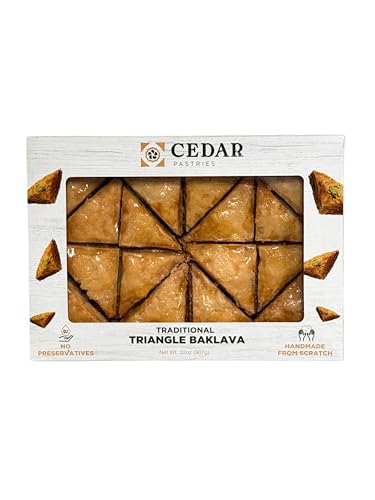
GOURMET BAKLAVA PASTRY COLLECTION - Delve into an exquisite flavor experience of Baklava goodness with Cerez Pazari. Ready for your indulgence in an assortment of 6 types of Baklava, send your taste buds on a delectable journey of Turkish confectionery perfection—Kadaifi With Pistachio Nuts, Kol with Shkor Walnut, Sultaniye with Pistachio Cashew Hazelnut and Almond, Pistachio Flower, Cashew Fingers, and Pistachio Balloria Brown.

PERFECT FOR ANY OCCASION Great for Ramadan, Father's Day, Mother's Day, Christmas, Thanksgiving, corporate gifting, hostess gifts, holiday dessert tables, or everyday indulgence.


Modern Variations and Innovations

You’ll find baklava evolving beyond the classic honey-and-walnut template as chefs and home bakers experiment with flavors and techniques. Small twists—different nuts, syrups, or spices—shift the dessert’s sweetness and texture while keeping its flaky identity.
Savory-sweet blends appear more often now. Pistachios, almonds, and mixed nuts replace or join walnuts to change crunch and oil content, which in turn affects how flaky the phyllo layers bake and separate. Citrus or floral notes (orange blossom, rosewater) in the syrup add brightness without overpowering the sugar.
Technique-driven innovations influence flakiness too. Brushing phyllo with clarified butter or light oil yields crisper, less soggy layers after syruping. Some bakers prebake layers briefly to lock structure before adding syrup, preserving contrast between crisp pastry and sticky filling.
You can also spot contemporary presentations that alter portioning and mouthfeel. Bite-sized rolls, cups, or layered bars reduce syrup absorption and concentrate texture. Modern syrups sometimes use lower sugar concentrations or incorporate fruit reductions to control sweetness levels.
Try these simple swaps to experiment:
- Use pistachio + almond for a lighter, more fragrant filling.
- Replace part of the sugar syrup with reduced citrus juice for tang.
- Lightly toast nuts to deepen flavor before chopping.
These changes keep baklava recognizable while letting you adapt sweetness and flakiness to your taste and the occasion.
Recommended Products

Authentic Lebanese Baklava
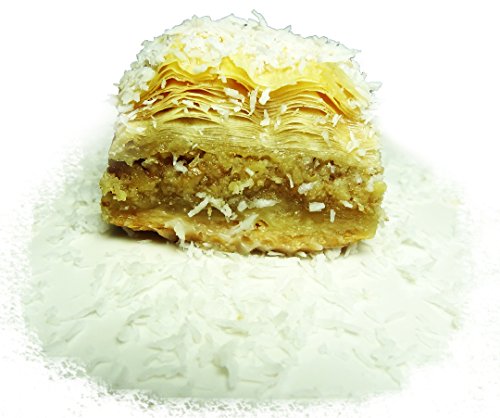
Vegan Baklava: Signature Special Release Coconut Snowflake Walnut Baklava crafted with traditional Middle Eastern recipe