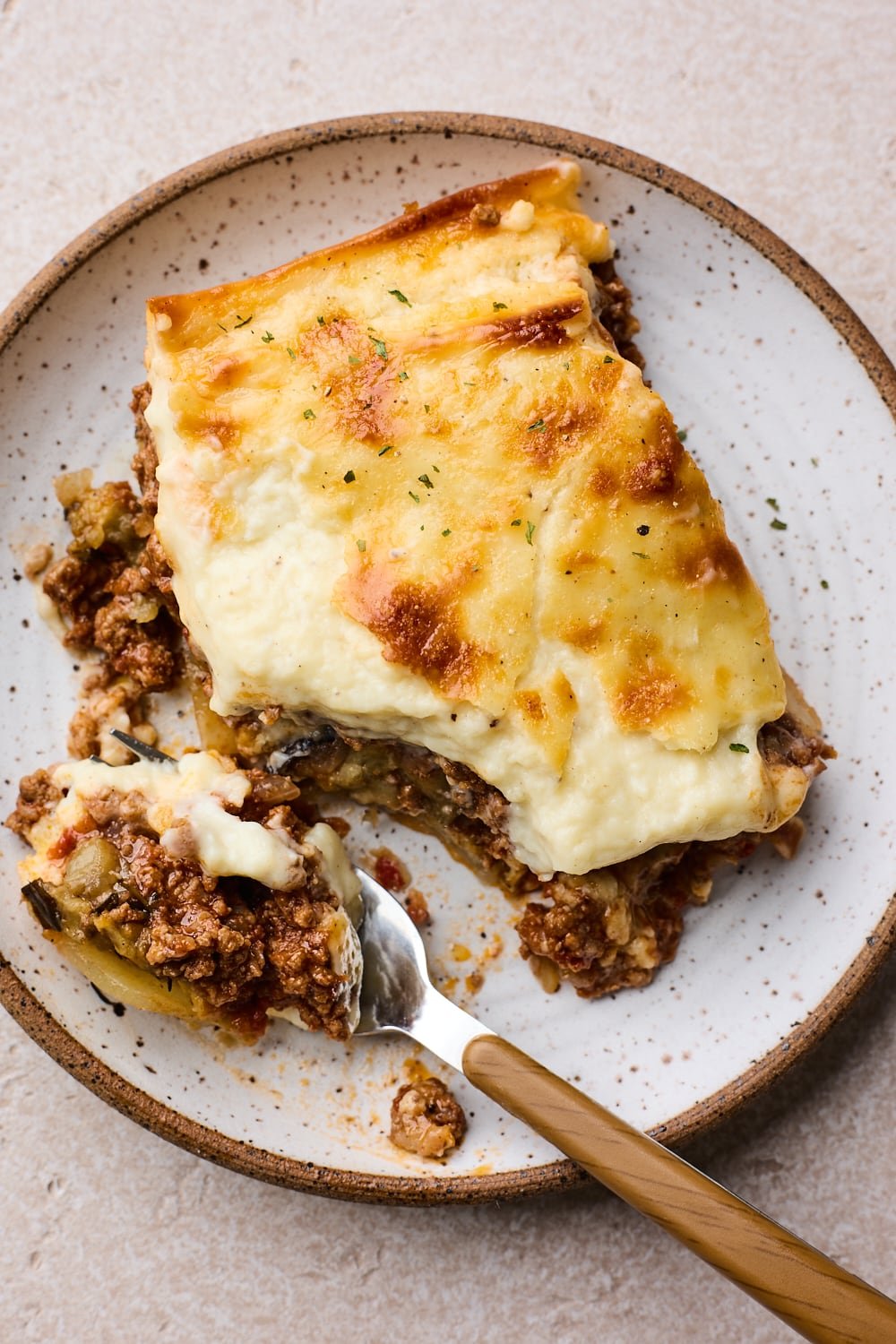

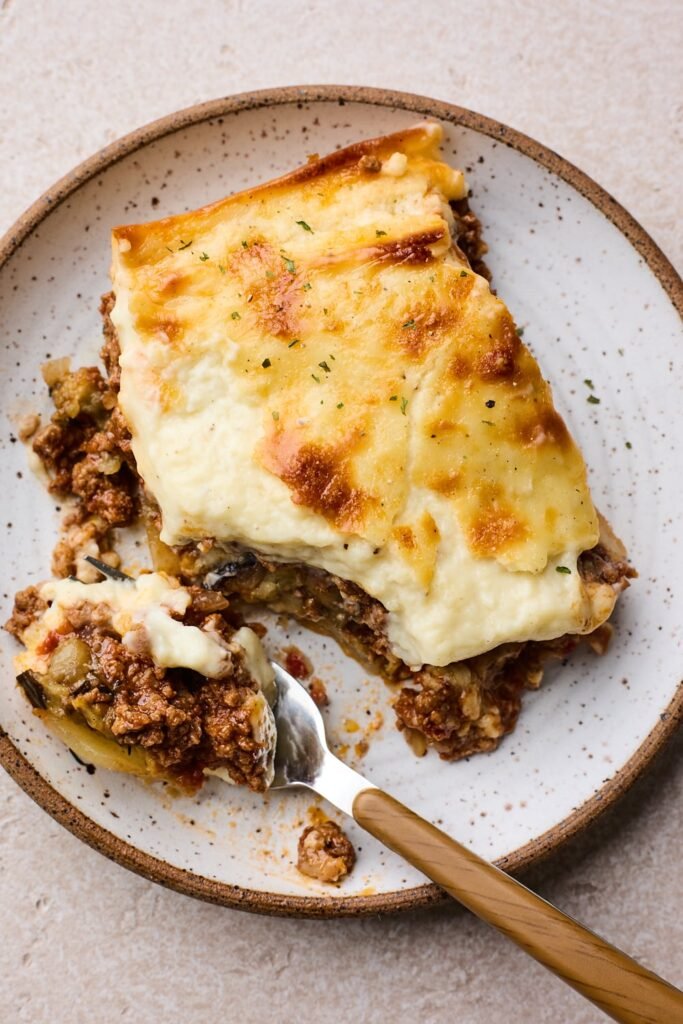


You’ll recognize classic Greek moussaka by its stacked harmony: tender eggplant and sometimes potato, a rich spiced meat sauce, and a creamy béchamel topping that bakes to golden perfection. The essential layers are roasted eggplant (often with potatoes), a tomato‑based ground lamb or beef sauce, and an egg‑enriched béchamel that crowns the dish.
If you want to master texture and flavor, you’ll learn how each component—how you slice and cook the vegetables, season the meat, and finish the béchamel—changes the final bite. Keep going to see clear guidance on the traditional layers, the best vegetable choices, meat seasoning tips, béchamel technique, and the proper assembly and baking steps.
Traditional Layers of Greek Moussaka

You’ll find three main components that build the classic structure: a tender eggplant layer, a richly seasoned meat filling, and a thick, nutmeg-kissed béchamel topping. Each piece contributes texture and flavor so the finished bake holds together and slices cleanly.
Recommended Products


Eggplant Base
Use firm globe eggplants or Italian eggplants, sliced 1/3–1/2 inch thick for even cooking. Salt the slices lightly and rest them 20–30 minutes to draw out bitterness and excess moisture; then rinse and pat dry.
You can fry, brush with oil and roast, or grill the slices. Roasting at 425°F (220°C) for 15–20 minutes gives a caramelized exterior without soaking the layers in oil. Layer the eggplant in a single even sheet, slightly overlapping, to form a stable base that absorbs the meat juices.
If you include potatoes, place a single thin potato layer under or mixed with eggplant. That adds sturdiness and a mild starch contrast, but keep slices uniform so the bake cooks evenly.
Savory Meat Filling
Choose ground lamb for the traditional flavor; beef or a lamb-beef mix works if you prefer milder taste. Brown the meat in a skillet, breaking it into small pieces so it distributes evenly between layers.
Add finely chopped onion, garlic, tomato paste or crushed tomatoes, and a splash of red wine or stock. Season with salt, black pepper, cinnamon, and a pinch of allspice or nutmeg for the classic aromatic profile. Simmer until the sauce is thick and most liquid has reduced—about 20–30 minutes—so it won’t make the casserole watery.
Finish the filling with chopped parsley and adjust seasoning. Spoon an even meat layer over the eggplant and press gently so the layers meld when baked.
Velvety Béchamel Sauce
Start with equal parts butter and flour (a roux), cooked briefly, then whisk in warm milk gradually to avoid lumps. Simmer until the sauce thickly coats a spoon; this gives you a firm top that browns but won’t collapse.
Enrich the béchamel with egg yolks off heat for silkiness; whisk quickly to incorporate without scrambling. Season with salt, white pepper, and a small amount of grated nutmeg to echo the meat spices.
Pour the béchamel over the assembled layers to a depth of about 1/3–1/2 inch. Smooth the surface and top with grated hard cheese (like Kefalotyri, Parmesan, or Grana Padano) for a golden, slightly crisp crust when baked at 350–375°F (175–190°C) until set and browned.


Vegetable Components

The vegetable layers add structure, texture, and mild sweetness to balance the meat and béchamel. You’ll want evenly cut, well-seasoned pieces that hold up during baking and release minimal moisture.
Recommended Products

Simmered with a complex blend of Italian seasonings, Hunt's sauce is perfect in pastas, chili, soups, and stews
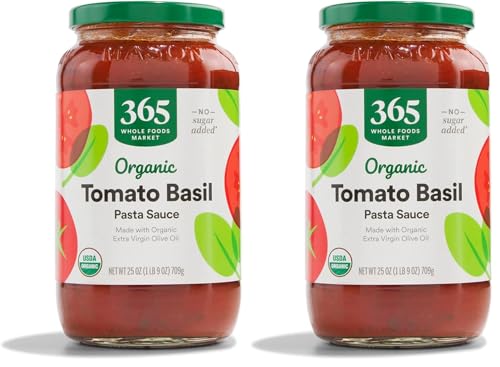
The information below is per-pack only

YOUR GO-TO ORGANIC SAVORY PASTA SAUCE: This golden tomato sauce is the perfect addition to any pasta. With a savory, garden-fresh flavor, you will be asked if “your sauce” is homemade.
Sautéed Potatoes
Use waxy potatoes like Yukon Gold or red potatoes, peeled and sliced to about 1/4–1/3 inch thick so they cook through without turning mushy. Parboil slices for 5–7 minutes or sauté in olive oil until lightly golden; this firms them and reduces water released into the casserole.
Season the potatoes lightly with salt, black pepper, and a pinch of dried oregano or thyme. Layer them in a single, slightly overlapping sheet; that creates a stable base and prevents gaps that let sauce seep through.
If you prefer crisper edges, pan-fry the slices in batches over medium-high heat until both sides brown, then drain on paper towels. For a lower-fat option, roast the slices at 425°F (220°C) with a thin brush of oil until tender and lightly colored.
Zucchini Slices
Select firm, medium-sized zucchini and slice them 1/8–1/4 inch thick so they soften but don’t collapse. Salt the slices lightly and let them sit 10–15 minutes to draw out excess moisture, then pat dry; this step keeps the final moussaka from becoming watery.
You can grill, roast, or pan-sear the zucchini. Quick searing in a hot skillet with a splash of oil gives caramelized flavor and a slightly chewy exterior. Roast at 425°F (220°C) for 10–12 minutes if you want an even, low-effort result.
Stack zucchini in a single layer above or interleaved with potatoes, depending on your recipe. Keep seasoning simple—black pepper, a little garlic powder, and a dusting of dried oregano pair well with the lamb-based meat sauce and béchamel.

Meat Layer Ingredients
This layer anchors the dish with hearty meat, a concentrated tomato base, and warm spices that cut through the richness. You’ll need high-quality ground meat, a well-seasoned tomato blend, and a few specific spices to get the classic balance.
Recommended Products

11 x 2.75 x 2.75 inch

Specially designed to efficiently whisk gravy, roux, and sauces

10. 5 x 2. 5 x 1. 25 inch
Ground Lamb or Beef
Choose ground lamb for the most traditional flavor; it gives the meat layer a distinct, slightly gamey richness. If lamb is hard to find or you prefer milder taste, use 80/20 ground beef for good fat content that keeps the sauce moist.
Brown the meat in batches to avoid steaming. Render the fat, then drain excess oil if it feels greasy. Browning creates caramelized bits that deepen the sauce.
For a balanced texture, aim for 1 to 1.25 pounds of meat for a 9×13-inch casserole serving 6–8. Season the meat lightly while cooking—salt, pepper, and a pinch of nutmeg or cinnamon later—so the aromatics layer on top rather than mask the meat’s flavor.
Tomato Sauce Blend
Use a dense, low-acid tomato base rather than watery canned tomatoes. Crushed tomatoes or passata work well because they thicken during simmering and cling to the meat. Add a tablespoon of tomato paste early to intensify umami.
Simmer the tomato-meat mixture until it reduces and darkens, about 20–30 minutes. This concentrates flavor and prevents a watery moussaka.
Include a splash (1–2 tablespoons) of red wine or beef broth to deepen the savory notes. Adjust sweetness with a pinch of sugar only if the tomatoes taste overly acidic. Finish with a small handful of chopped parsley for freshness.
Aromatic Spices
Use warm, Mediterranean spices sparingly to complement, not overpower. The classic trio is cinnamon, allspice, and black pepper—start with 1/4 to 1/2 teaspoon of ground cinnamon and 1/8 teaspoon of ground allspice for the whole batch.
Add a bay leaf during simmering and remove before assembling. Finely chopped onion and 2–3 cloves of garlic sautéed with the meat provide foundational aroma.
Season in layers: salt early to draw moisture from onions, then taste and adjust spices after reduction. Freshly ground black pepper and a pinch of nutmeg—especially if your béchamel contains nutmeg—help tie the meat and topping together.


Béchamel Sauce Details
This sauce creates the creamy top layer that binds the moussaka. It needs a smooth texture, a lightly seasoned flavor, and enough body to hold its shape when sliced.
Recommended Products

MADE FROM FRESH DOMESTIC EGGS:Our Dried Standard Egg Yolk Powder is made from fresh, clean, domestic chicken eggs after being properly washed, sanitized and inspected. The egg yolks are separated and inspected again before being filtered, pasteurized and dried under continuous examination. This premium dried eggs powder is prepared under strict inspection and complying with all regulations and standards, retaining its original authentic taste.

Natural: Our nutmeg is vegan and natural, making it the perfect choice for those looking for a quality, ethical product.
Milk and Butter Mixture
Start by melting unsalted butter in a saucepan over medium heat until it foams but does not brown. Whisk in an equal-weight amount of all-purpose flour to make a roux; cook 1–2 minutes to remove the raw flour taste without letting it color.
Gradually add whole milk (warmed slightly) in a steady stream while whisking to prevent lumps. Bring the mixture to a gentle simmer and stir until it thickens to a coat-the-back-of-a-spoon consistency. If the sauce gets too thick, thin it with a splash of milk; if too thin, simmer briefly and whisk constantly.
Season with fine sea salt, a pinch of white pepper for a cleaner heat, and a small grating of nutmeg. Taste and adjust; the béchamel should be savory but not overpowering, since it will sit atop the already-seasoned meat and vegetables.
Egg Yolks for Enrichment
Temper room-temperature egg yolks to enrich the béchamel and add silkiness without curdling. Whisk the yolks in a bowl, then slowly add a ladle of hot béchamel while whisking constantly to raise the yolk temperature.
Pour the warmed yolk mixture back into the saucepan over lowest heat. Stir continuously for 1–2 minutes until the sauce thickens slightly and gains a glossy sheen. Do not boil after adding yolks; heat above 80–82°C (176–180°F) risks scrambling.
Use 1–2 yolks for a standard 9×13-inch moussaka depending on how rich you want it. Yolks help the top set into a sliceable, custard-like layer while keeping the mouthfeel creamy.
Grated Cheese Topping
Fold a portion of finely grated cheese into the béchamel for flavor and structure; classic choices are Parmesan or a tangy Kefalotyri if you can source it. Use about 1/2 to 1 cup grated cheese for a 9×13 pan, adding it off the heat so it melts evenly.
Reserve a thin dusting of cheese to sprinkle on top just before baking; this promotes a golden, slightly crisp crust. For even browning, you can also mix a tablespoon of breadcrumbs with the final sprinkle.
If you prefer a milder finish, use a combination of Parmesan and mild white cheddar. Adjust the salt in the béchamel after adding cheese, since aged cheeses add concentrated salt and umami.


Assembly and Baking Process
Assemble the casserole with deliberate layers and steady hands, then bake until the béchamel sets and the top turns golden. Pay attention to spacing, moisture control, and oven timing to keep layers distinct and prevent sogginess.
Layering Order
Start with a single even layer of thinly sliced, roasted or pan-fried potatoes across the bottom of your greased baking pan; this gives structure and catches juices. Add a layer of eggplant slices next, arranged so they slightly overlap to avoid gaps that let sauce pool unevenly.
Spoon the spiced ground lamb (or beef) tomato sauce evenly over the eggplant, smoothing it to the pan edges so no air pockets remain. Repeat with another eggplant layer if your pan depth allows, then finish with a final eggplant or potato layer depending on your preference for texture.
Pour your béchamel sauce over the top in a steady stream, then use a spatula to spread it into a uniform, about 1/3–1/2 inch thick, coating. Lightly tap the pan on the counter to settle the sauces and remove trapped air.
Baking Tips
Preheat your oven to 350°F (175°C) to ensure even cooking from the start. Bake uncovered for 45–60 minutes; look for a deeply set béchamel and a golden-brown top. If the surface browns too quickly, tent loosely with foil.
Let the moussaka rest for at least 20–30 minutes after baking; this firms the béchamel and makes slicing neat. Use a serrated or offset spatula to lift portions gently. For a crisper top, run under a hot broiler for 1–2 minutes at the end, watching closely to avoid burning.