
Written by

Edited by

Affiliate Disclosure:
If you buy through links on our site, we may earn a small affiliate commission to help support the blog – at no extra cost to you. It never influences our product selection process. Thank you!
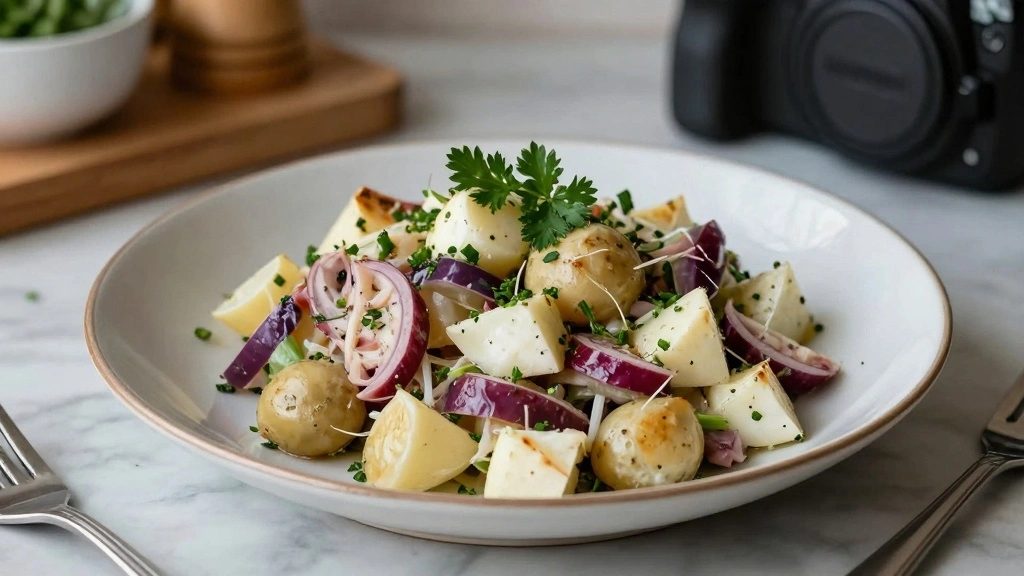
The Greek Potato Salad, a timeless classic, melds together the earthy flavors of potatoes with the vibrant notes of Mediterranean ingredients.
Its refreshing yet hearty flavor profile makes it a versatile dish perfect for any season.
I first encountered this delightful recipe on a sun-drenched island in Greece, where it was served both warm and cold, capturing the essence of Greek hospitality.
This salad is a beautiful blend of simplicity and sophistication, making it an ideal choice for both casual gatherings and elegant dinners.
Whether you’re savoring it as a side dish or a light main course, Greek Potato Salad promises a satisfying culinary experience.
Prepare to impress your guests with this delicious and easy-to-make dish that showcases the best of Greek flavors.
• The dish evolved over decades as ingredients like olive oil and lemon juice were incorporated, eventually becoming the beloved version we know today.
• In Greek culture, this dish traditionally appears at family gatherings and festive occasions, symbolizing unity and shared joy.
• While many variations exist across different regions, the authentic version maintains the use of fresh herbs and simple dressings that set it apart from imitations.
Mixing Bowl: A spacious mixing bowl allows for easy tossing of ingredients, ensuring the dressing coats each piece evenly. Look for one with a sturdy base to prevent tipping.
Sharp Knife: A sharp knife is crucial for chopping vegetables finely and uniformly, which is key to achieving the perfect texture. A chef’s knife with a comfortable handle will enhance precision and ease.
| Amount | Ingredient | Notes |
|---|---|---|
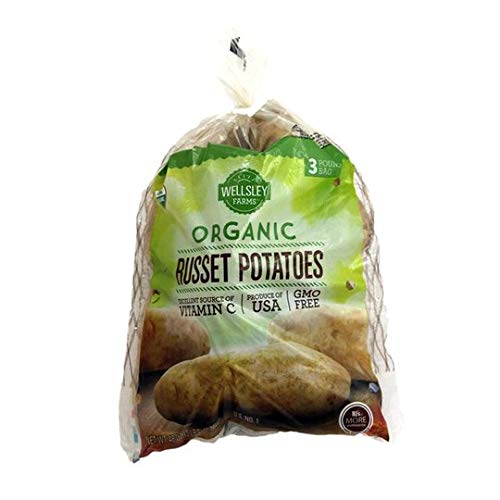
| 4 medium | potatoes | peeled and cubed |
| 1 cup | cherry tomatoes | halved |
| Amount | Ingredient | Notes |
|---|---|---|
| 3 tablespoons | olive oil | adds richness |
| 2 tablespoons | lemon juice | for tanginess |
| Amount | Ingredient | Notes |
|---|---|---|
| 1 medium | cucumber | diced |
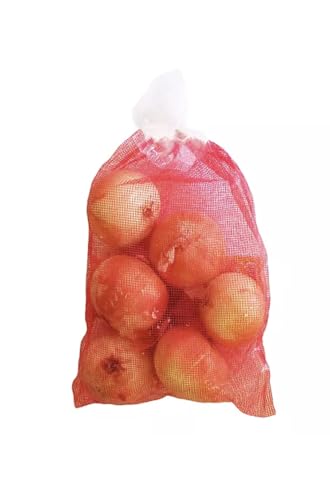
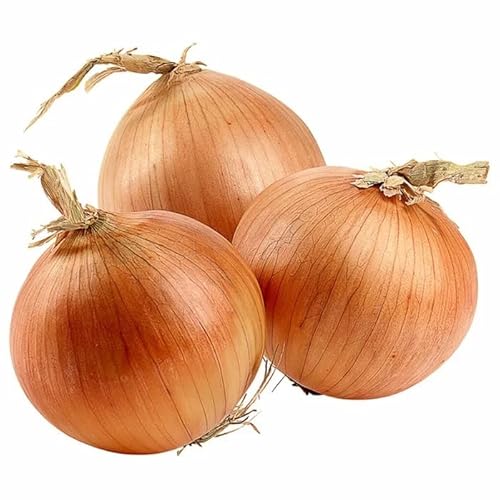
| 1 small | red onion | finely chopped |
| Amount | Ingredient | Notes |
|---|---|---|
| 1 teaspoon | oregano | for authentic flavor |
| 1 teaspoon | salt | enhances flavor |
| 0.5 teaspoon | black pepper | for a mild kick |
| Amount | Ingredient | Notes |
|---|---|---|
| 0.5 cup | feta cheese | crumbled |
| 2 tablespoons | fresh parsley | finely chopped |
Macerating Onions: Macerating onions in lemon juice reduces their sharpness while adding tanginess. Soak chopped onions for 10 minutes to mellow their flavor.
Tossing Techniques: Gently toss the salad ingredients to avoid breaking the potatoes. Use a folding motion from the bottom of the bowl to the top to ensure even distribution of the dressing.
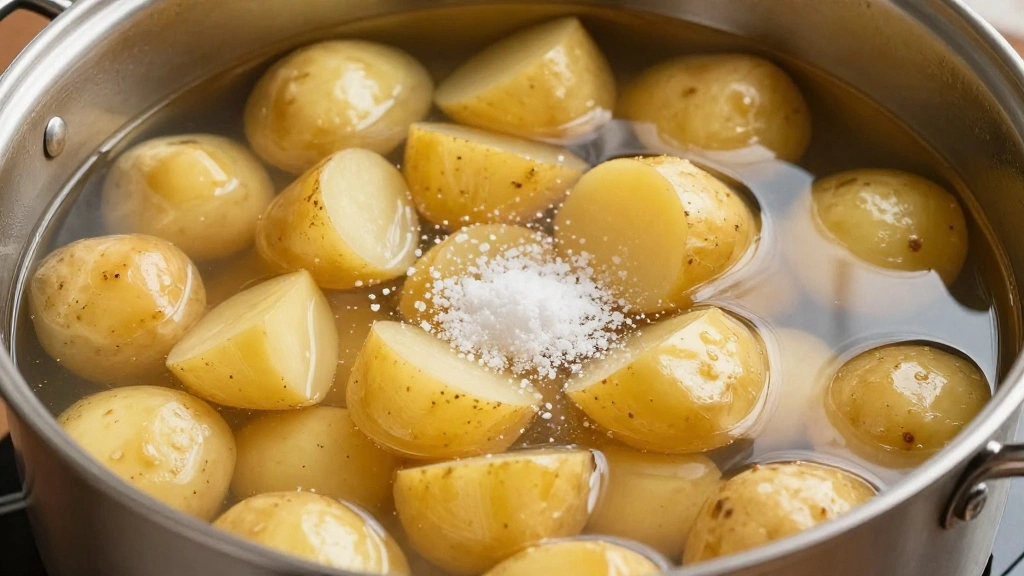
Place them in a large pot and cover with cold water.
Add a pinch of salt to the water.
Bring to a boil over medium heat until tender, about 15-20 minutes.
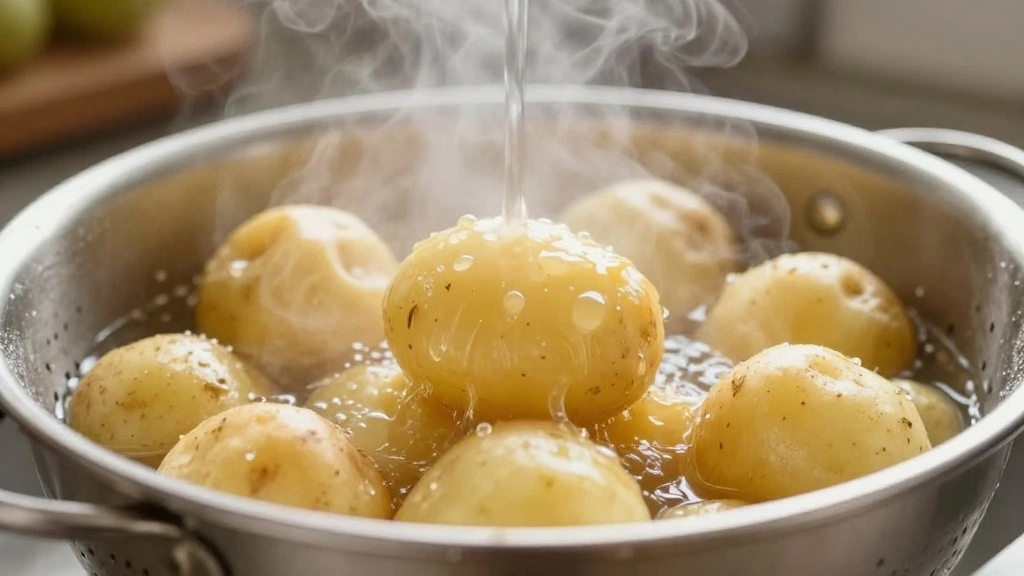
Allow them to cool slightly for about 5 minutes.
Ensure they remain warm but not steaming hot.
This helps them absorb the dressing better.
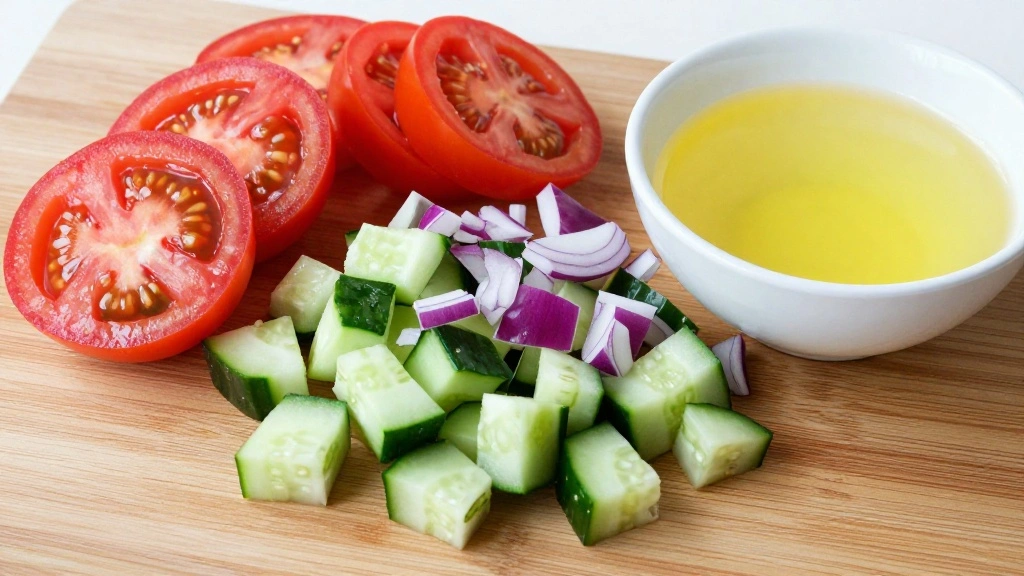
Finely chop the red onion.
Macerate the onions by soaking them in lemon juice for 10 minutes.
This will soften their flavor.
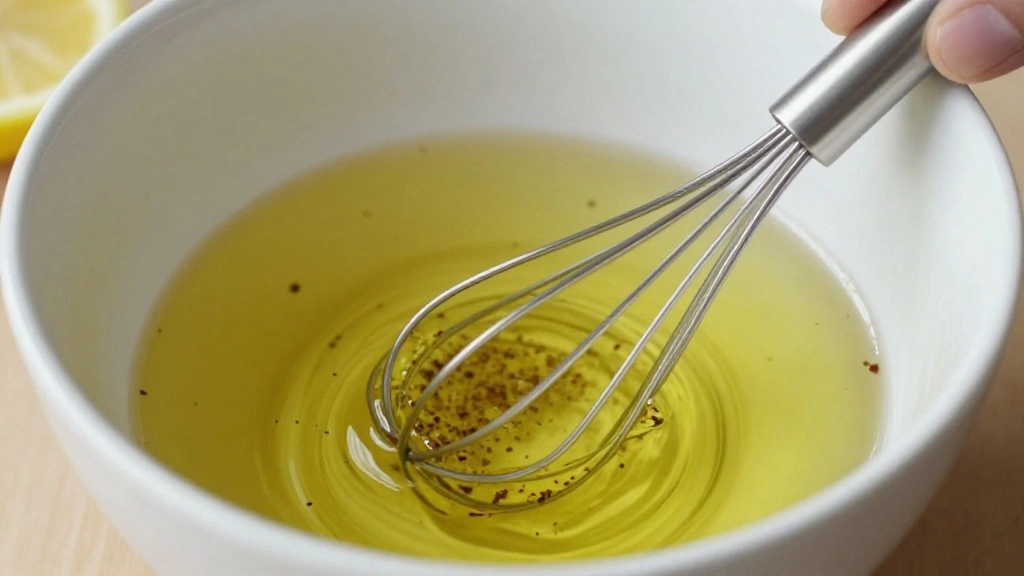
Add oregano, salt, and black pepper.
Whisk until well blended.
Taste and adjust seasoning if necessary.
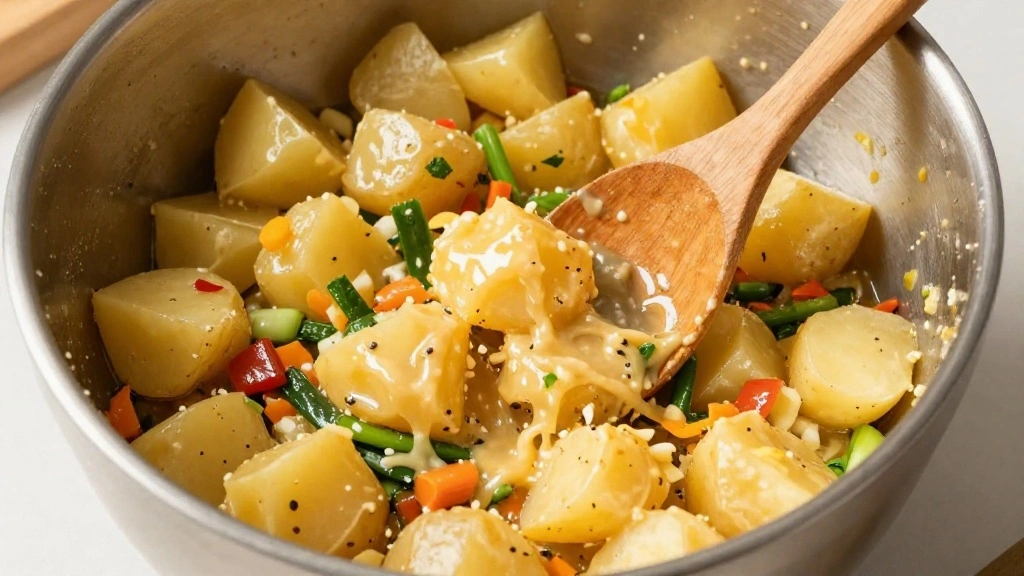
Add the prepared vegetables and macerated onions.
Pour the dressing over the ingredients.
Gently toss to coat evenly.
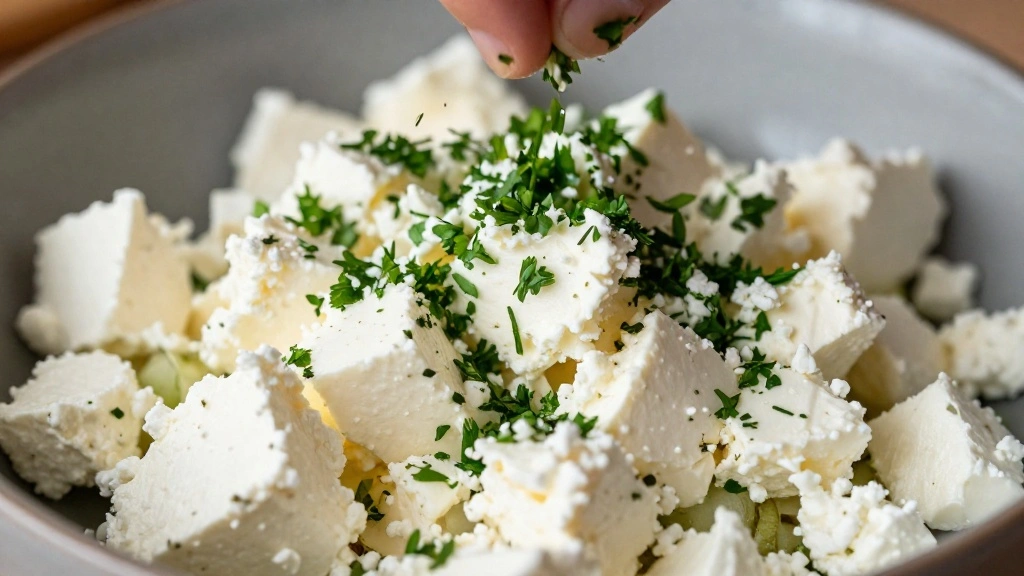
Sprinkle with freshly chopped parsley.
Ensure even distribution of garnishes.
This adds flavor and visual appeal.
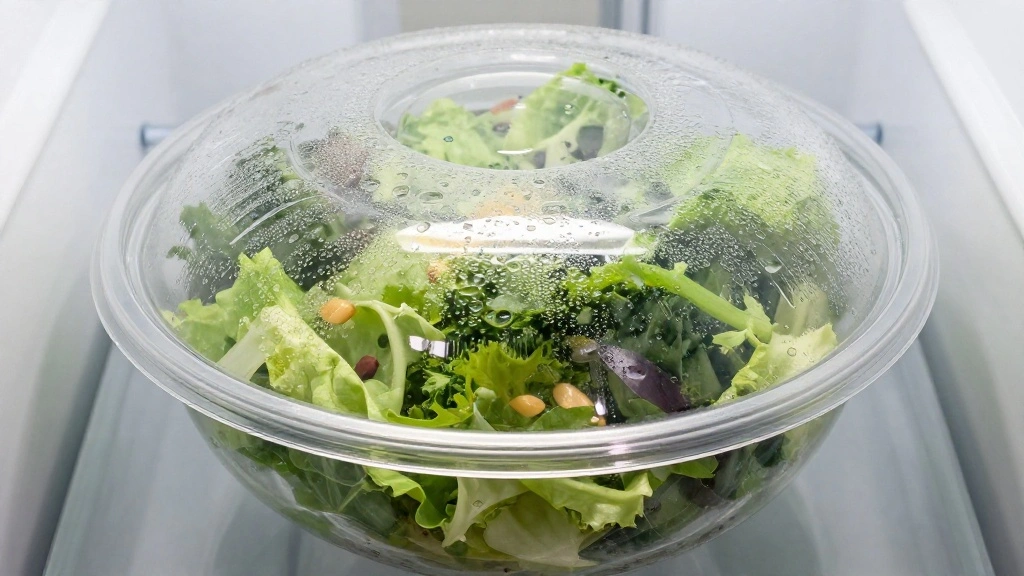
This allows flavors to meld together.
Ensure it’s well covered to prevent drying.
If serving warm, skip this step.
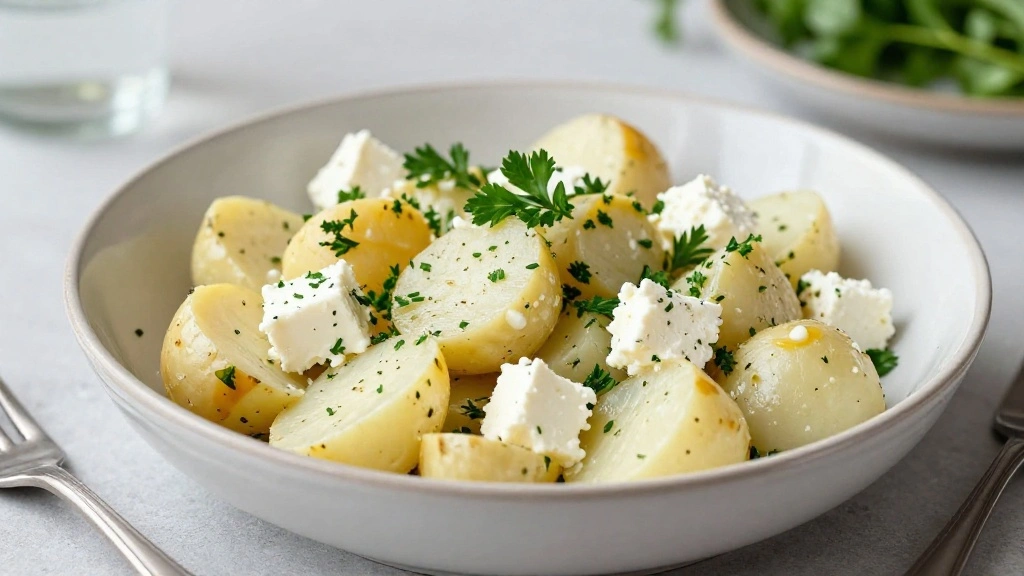
Arrange neatly for an attractive presentation.
Serve chilled or at room temperature.
Enjoy as a side or light main course.
Chilling Time: Chill the salad for at least 30 minutes for a cold version. Longer chilling allows flavors to meld better.
Serving Temperature: Serve the salad chilled or at room temperature. Avoid serving too cold as flavors might be muted.
• Preparation Secret: Let warm potatoes sit in the dressing for a few minutes to absorb more flavor.
• Temperature Management: Ensure potatoes are slightly warm when tossing with dressing for better absorption.
• Texture Enhancement: Avoid overmixing the salad to maintain the integrity of each component.
• Flavor Layering: Use fresh herbs like parsley and oregano to enhance the Mediterranean flavor profile.
• Make-Ahead Strategies: Prepare all components separately and combine just before serving for the freshest taste.
• Restaurant-Quality Finishing Touches: Add a drizzle of high-quality olive oil just before serving for a rich finish.
• Equipment Optimization: Use a quality whisk for the dressing to achieve a smooth and emulsified blend.
• Flavors Too Mild: If the salad tastes bland, adjust seasoning by adding more salt, lemon juice, or herbs.
• Dressing Separation: If the dressing separates, whisk it vigorously before adding to the salad.
• Onions Too Pungent: Soak onions longer in lemon juice to reduce pungency if needed.
• Salad Too Dry: Add a bit more olive oil and lemon juice if the salad seems dry after chilling.
• Mainland Style: Often includes olives and hard-boiled eggs, adding richness and depth.
• Modern Twist: Some chefs add avocado for creaminess, blending traditional and contemporary tastes.
• Vegan Version: Omit feta cheese and replace with marinated tofu for a plant-based option.
• Emulsion Science: The combination of oil and lemon juice forms an emulsion, crucial for a smooth dressing.
• Acid Denaturation: Lemon juice denatures proteins in onions, softening their flavor and reducing pungency.
Can I make this salad ahead of time? Yes, prepare the components separately and combine them before serving.
How can I adjust the seasoning to my taste? Taste the salad before serving and add more salt, pepper, or lemon juice as needed.
What type of potatoes are best for this salad? Waxy potatoes like Yukon Gold are ideal for retaining shape and absorbing flavors.
Is it better to serve this salad warm or cold? Both options are delicious; choose based on personal preference and occasion.
Can I use dried herbs instead of fresh? Yes, but reduce the quantity as dried herbs are more concentrated.
How can I prevent the salad from becoming watery? Ensure all vegetables are well-drained and pat dry before combining.
• Elegant Plating: Use a white serving platter for a clean, modern look, garnished with lemon wedges.
• Family Style: Arrange in a large, colorful ceramic dish for a festive, casual presentation.
• Individual Portions: Serve in small bowls or ramekins for personalized servings at a dinner party.
Whether you enjoy it warm or cold, its refreshing taste is sure to delight everyone.
Give this recipe a try and experience the joy of Greek culinary tradition in your own kitchen.


Greek Recipes
Greek Recipes

Greek Recipes
Greek Recipes
Greek Recipes