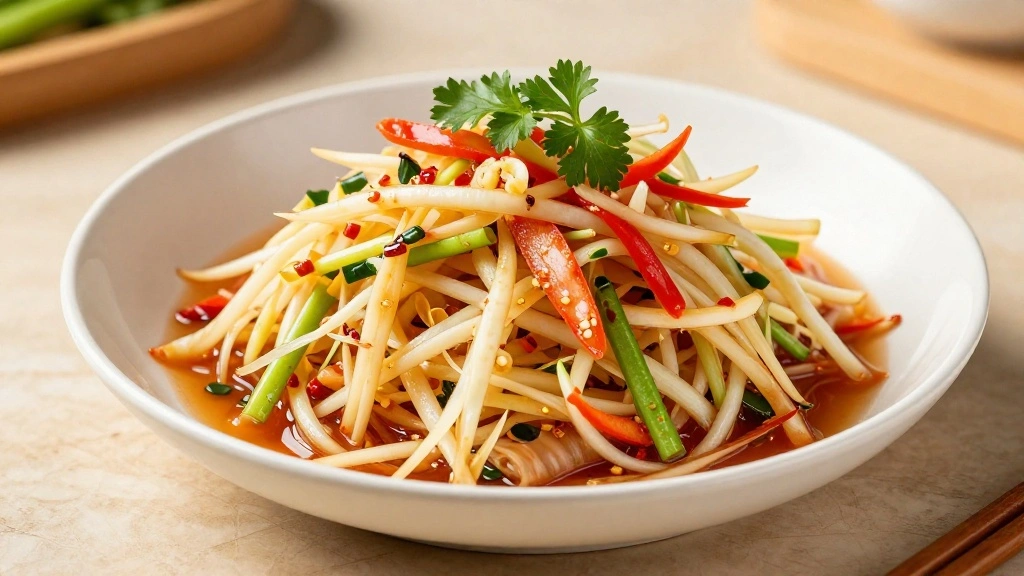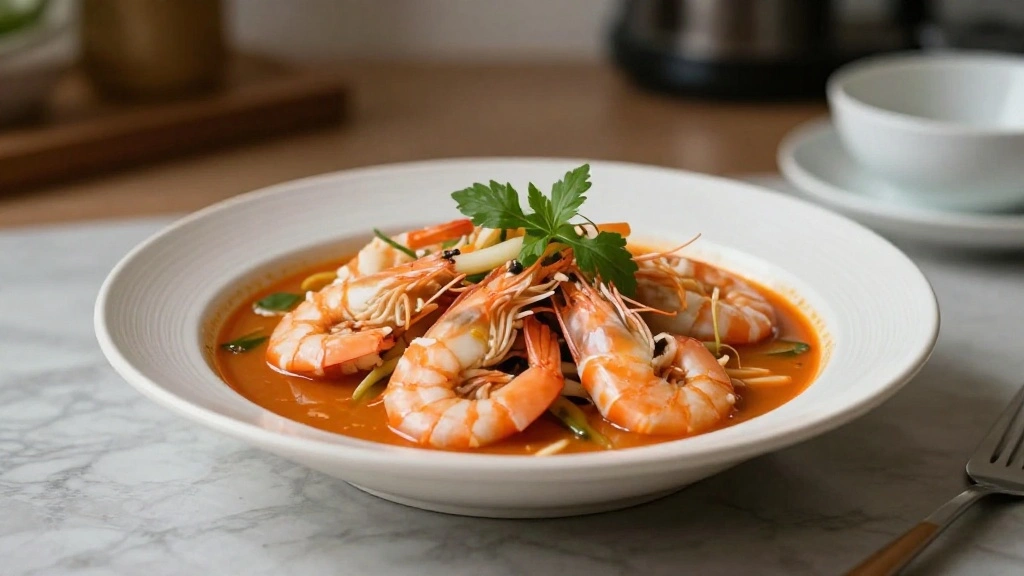

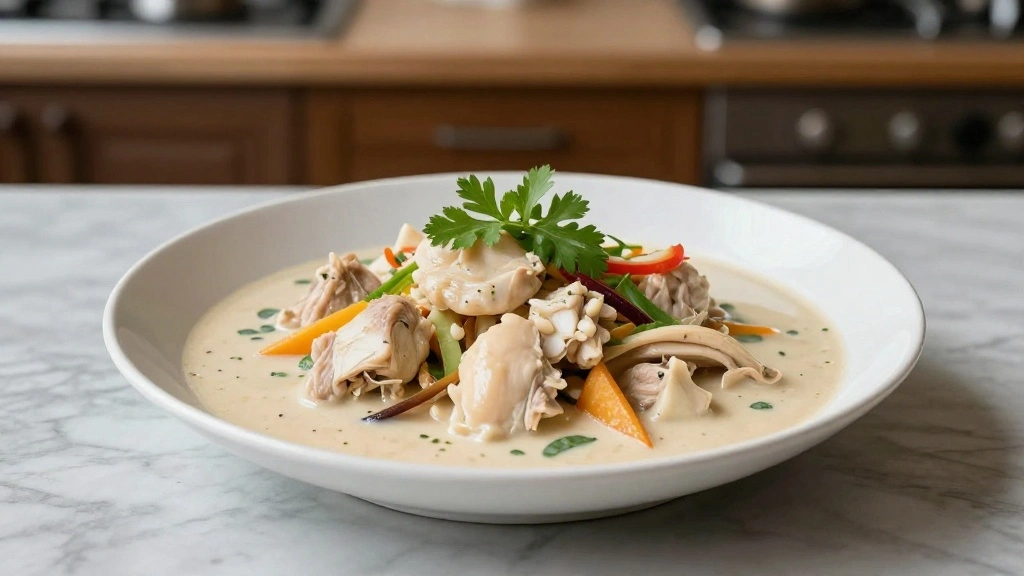


One spoonful of Creamy Tom Kha Gai transports you to the bustling streets of Thailand, where the vibrant flavors of lemongrass, galangal, and coconut milk converge in perfect harmony.
This comforting soup is a delightful balance of tangy, spicy, and creamy, making it a favorite among Thai food enthusiasts.
I first encountered this dish at a cozy café in Bangkok, where the locals eagerly shared their secrets to achieving its depth of flavor.
Ideal for chilly evenings or as a starter for a Thai-themed dinner, this soup promises to impress with its bold yet soothing taste.
Whether you’re a seasoned cook or a beginner, this easy recipe will guide you to create an authentic Thai experience at home.
The History and Cultural Significance
• Creamy Tom Kha traces its origins to Central Thailand, where it was originally created by local cooks who combined indigenous ingredients to combat the humid climate.
• The dish evolved over decades as trade with neighboring countries introduced new spices and techniques, eventually becoming the beloved version we know today.
• In Thai culture, this dish traditionally appears at festive gatherings and family meals, symbolizing warmth and unity.
• While many variations exist across different regions, the authentic version maintains a rich yet balanced broth that sets it apart from imitations.


Recipe Overview
Nutritional Information (per serving)
Essential Equipment Guide
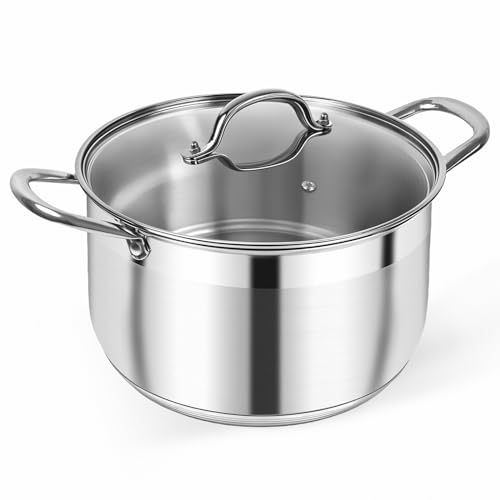
Medium Pot: A medium-sized pot is essential for simmering the soup evenly, allowing flavors to meld without overcrowding. Non-stick or stainless steel options work well, provided they distribute heat evenly.
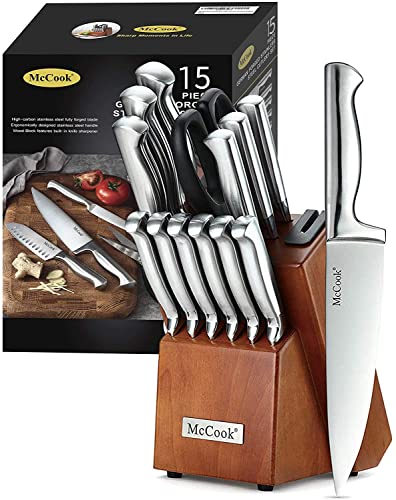
Sharp Knife: A sharp knife ensures clean cuts of chicken and vegetables, crucial for even cooking and presentation. Look for a knife with a comfortable grip and a balanced weight.
Fine Mesh Strainer: This tool is important for straining the soup to remove tough lemongrass and galangal slices, which enhances the soup’s texture. A medium-sized strainer works best, with fine mesh for thorough straining.


Ingredients
For the Base
|
| Amount | Ingredient | Notes |
|---|---|---|
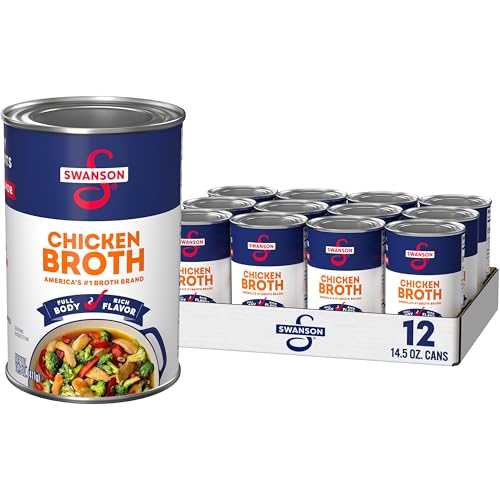
| 2 cups | chicken broth | provides savory depth |
| 1 cup | coconut milk | adds creaminess and richness |
Vegetables
| Amount | Ingredient | Notes |
|---|---|---|
| 3 stalks | lemongrass | bruised to release flavor |
| 2 inch | galangal | sliced, for aromatic spice |
Protein
| Amount | Ingredient | Notes |
|---|---|---|
| 1 pound | chicken breast | sliced thin for even cooking |
Seasonings
| Amount | Ingredient | Notes |
|---|---|---|
| 2 tablespoons | fish sauce | for umami and saltiness |
| 1 tablespoon | lime juice | adds tanginess and brightness |


Preparation Methods
Bruising Lemongrass: Bruising lemongrass involves gently crushing the stalks to release essential oils. This technique infuses the soup with a fresh, citrusy aroma. Use the back of a knife or a pestle for best results.
Slicing Galangal: Galangal is a root with a tough texture, requiring careful slicing. Thin, even slices are crucial for maximizing flavor extraction during cooking.
Simmering: Simmering is a gentle cooking method that allows flavors to blend without boiling away delicate aromas. Keep the heat low and cover the pot partially to maintain a steady simmer.


Step 1: Prepare Ingredients
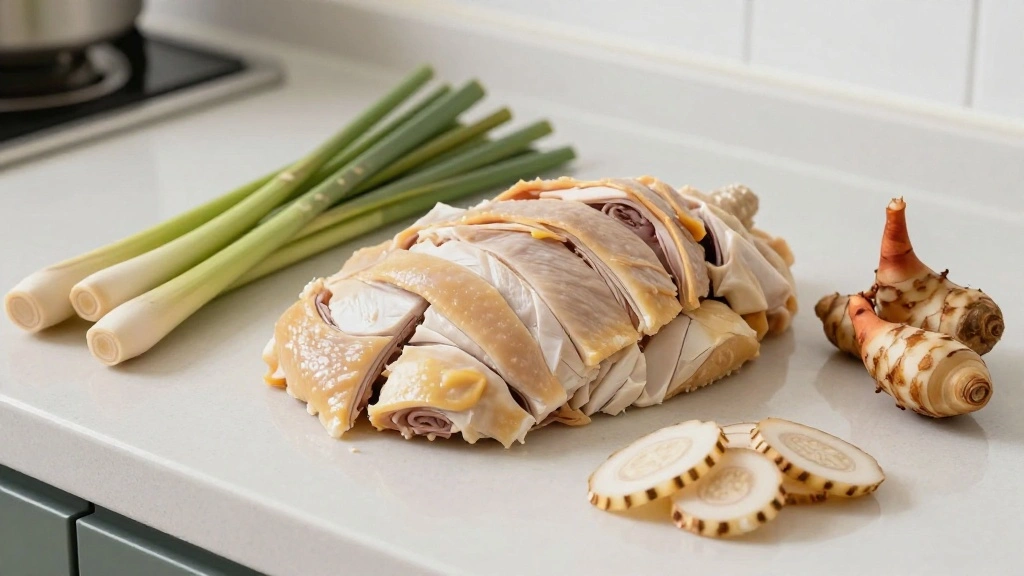
Gather all ingredients and place them within easy reach.
Wash and slice the chicken breast into thin strips.
Bruise the lemongrass stalks using the back of a knife to release their oils.
Slice the galangal thinly, ensuring even pieces for consistent flavor.



Step 2: Heat Broth
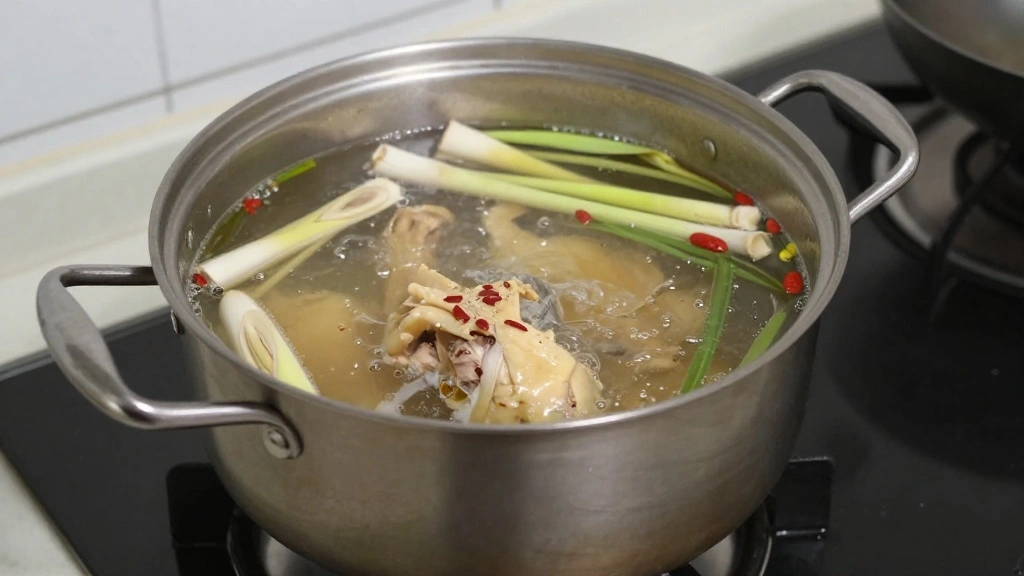
Pour the chicken broth into a medium pot over medium heat.
Add bruised lemongrass and sliced galangal to the pot.
Bring the mixture to a gentle simmer, watching for small bubbles forming.
This step infuses the broth with aromatic flavors.
Step 3: Add Coconut Milk
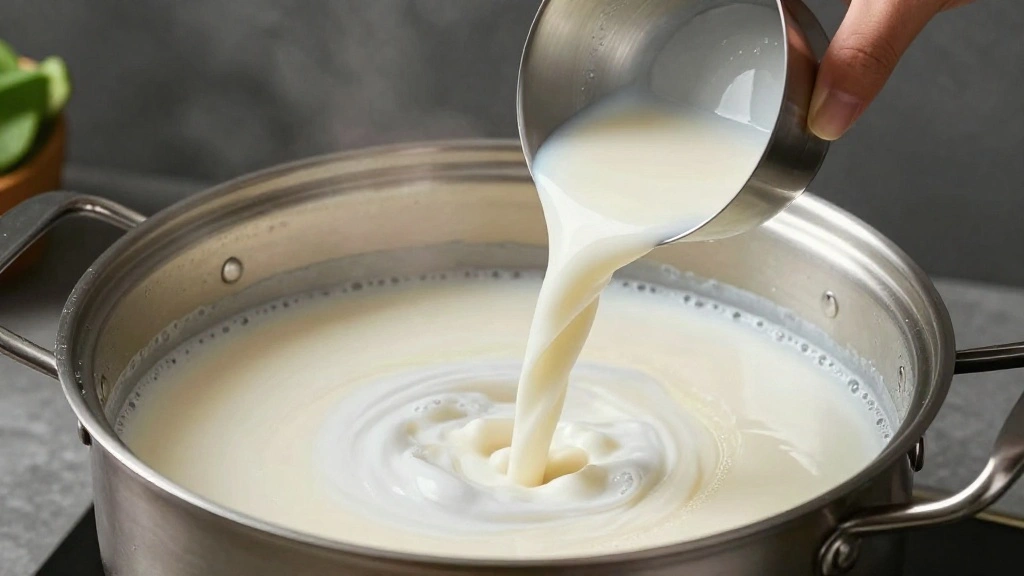
Stir in the coconut milk slowly, mixing it thoroughly with the broth.
Ensure the heat remains at a gentle simmer to prevent curdling.
Watch as the liquid turns a creamy, uniform color.
This step builds the soup's rich, velvety texture.


Step 4: Incorporate Chicken
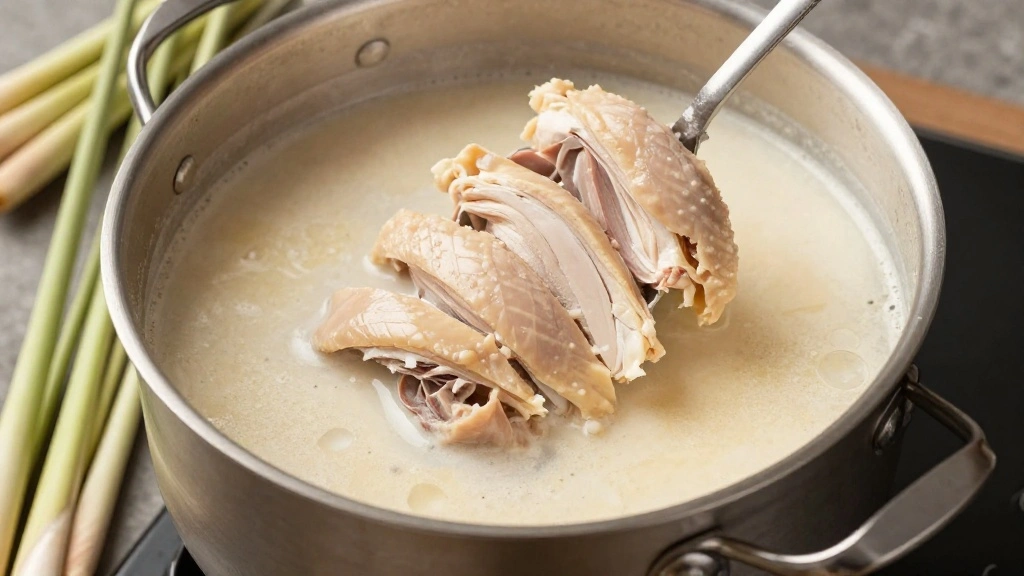
Add sliced chicken to the pot, spreading the pieces evenly.
Ensure the chicken is fully submerged in the liquid.
Simmer gently until the chicken is cooked through, turning opaque.
This ensures the chicken absorbs the soup's flavorful base.


Step 5: Season the Soup

Add fish sauce to the pot for an umami boost.
Stir in lime juice, balancing the soup’s creamy and tangy elements.
Taste and adjust the seasoning as necessary.
This step is crucial for achieving the perfect flavor balance.


Step 6: Final Simmer
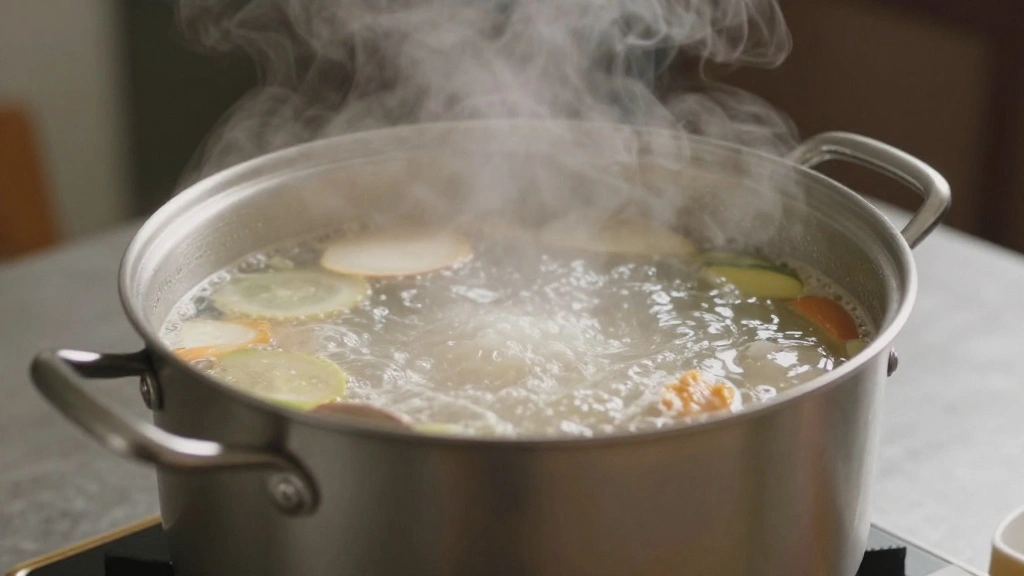
Let the soup simmer gently for another 5 minutes.
This allows all the flavors to meld together harmoniously.
Watch for steam rising and a gentle bubbling at the surface.
Avoid boiling to maintain the delicate balance of flavors.


Step 7: Strain the Broth
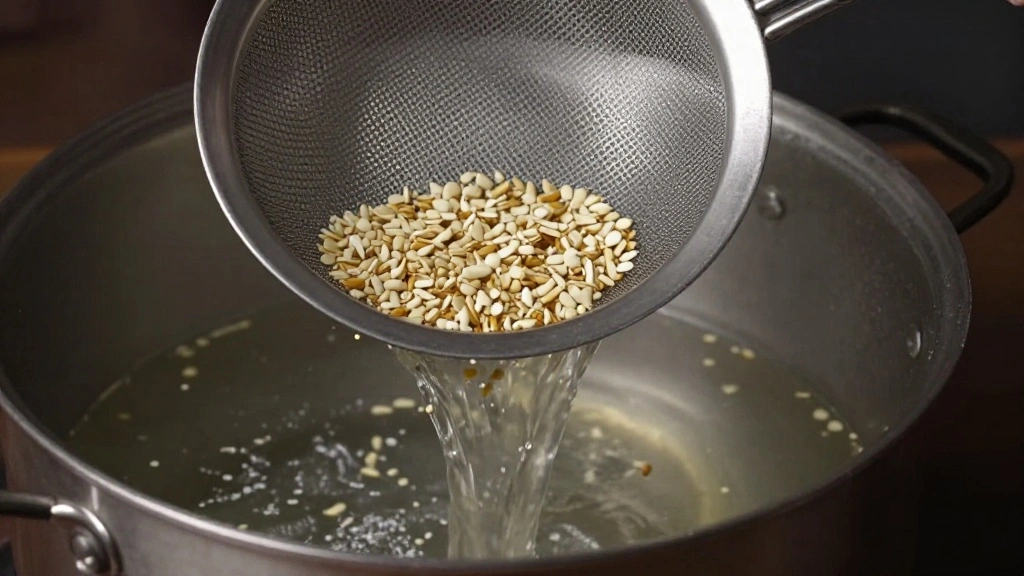
Remove the pot from heat and set a fine mesh strainer over a large bowl.
Pour the soup through the strainer to remove lemongrass and galangal.
Collect the strained liquid back into the pot.
This step ensures a smooth, refined texture.


Step 8: Serve and Garnish
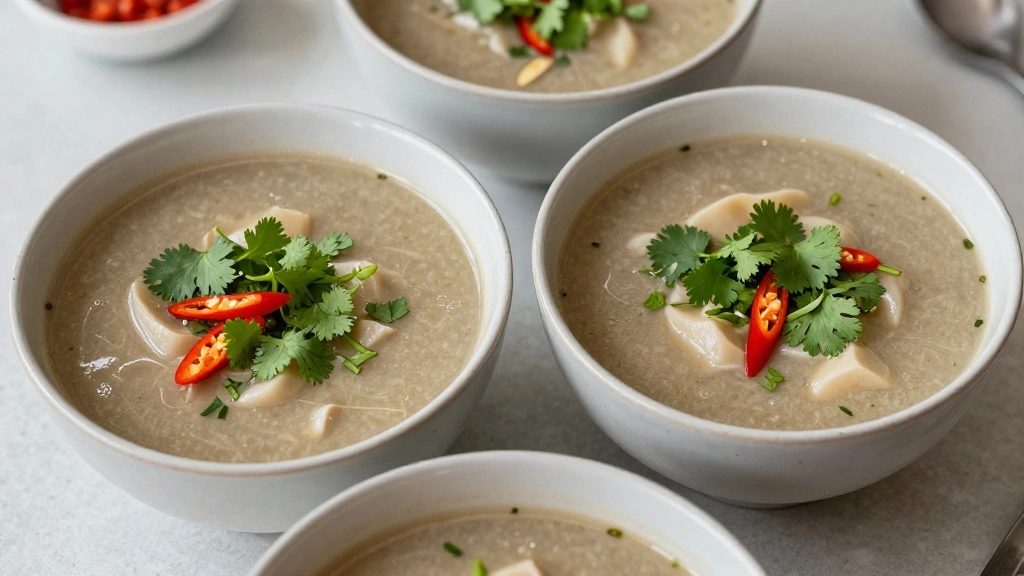
Ladle the hot soup into individual bowls.
Garnish with fresh cilantro and slices of red chili for color and heat.
Serve immediately to enjoy at its freshest.
This final touch adds visual appeal and a burst of fresh flavor.


Critical Timing and Temperature Guide
Simmering the Broth: Simmer the broth at a low heat setting for 10 minutes, ensuring lemongrass and galangal fully infuse their flavors. Look for gentle bubbles and avoid boiling, which can make the broth cloudy.
Cooking Chicken: Add chicken once the broth is simmering and maintain the low heat for about 5-7 minutes. Ensure chicken turns opaque and is fully cooked without overcooking, which can lead to a tough texture.
Final Simmer: After adding all ingredients, simmer for 5 more minutes to meld flavors. Avoid boiling to keep the coconut milk from separating, maintaining a smooth consistency.
Pro Tips for Creamy Tom Kha
• Ingredient Selection: Use fresh lemongrass and galangal for the most authentic flavor. Frozen or dried versions lack the vibrant aromas essential to this dish.
• Preparation Secret: Lightly bruise lemongrass to release its oils, a technique often overlooked but crucial for flavor.
• Temperature Management: Keep the coconut milk from reaching a full boil, as high temperatures can cause it to curdle, affecting texture.
• Texture Enhancement: Strain out tough aromatics like lemongrass and galangal before serving for a silky, refined soup.
• Flavor Layering: Add fish sauce and lime juice at the end to preserve their vibrant flavors, creating depth and complexity.
• Make-Ahead Strategies: Prepare the broth base a day ahead and refrigerate. Reheat and add fresh ingredients just before serving to save time without losing quality.
• Restaurant-Quality Finishing Touches: Garnish with freshly chopped cilantro and red chili slices for a professional look and added flavor.
• Equipment Optimization: A medium pot with a heavy base prevents hot spots, ensuring even cooking and flavor development.


Troubleshooting Common Issues
• Curdled Coconut Milk: This occurs when the soup is boiled too rapidly. To fix, reduce heat immediately and stir gently. For future attempts, maintain a gentle simmer.
• Lack of Flavor: Often due to insufficient simmering time or not using fresh ingredients. To remedy, extend simmering and ensure fresh herbs and spices are used.
• Chicken Too Tough: Overcooking leads to tough chicken. Check chicken for doneness earlier and maintain a low simmer to keep it tender.
• Sourness Overpowering: Excessive lime juice can dominate flavors. Adjust by adding a small amount of sugar to balance acidity.
• Soup Too Spicy: If chili levels are too high, dilute with more coconut milk or broth. Future versions should adjust chili quantities gradually.


Variations and Regional Differences
• Northern Thai Variation: This version includes the addition of kaffir lime leaves and mushrooms, enhancing the herbal and umami notes.
• Southern Thai Style: Uses a spicier broth with additional chili paste, reflecting the region's love for heat.
• Vegetarian Version: Replaces chicken with tofu and uses vegetable broth, offering a lighter, plant-based alternative.
• Seafood Tom Kha: Swaps chicken for shrimp or fish, adding a coastal twist to the classic recipe.

Food Science Behind the Recipe
• Emulsification of Coconut Milk: The proteins in coconut milk can separate if overheated. Gentle simmering helps maintain a stable emulsion, keeping the soup creamy.
• Flavor Extraction: Bruising lemongrass and slicing galangal increases surface area, allowing more essential oils to infuse the broth, enhancing aroma and taste.
• Umami Development: Fish sauce contributes glutamates, which are natural flavor enhancers, creating a deep umami profile essential to Thai cuisine.
Frequently Asked Questions
What's the most common mistake people make when preparing Tom Kha Gai? The most common mistake is boiling the coconut milk, which can cause it to curdle and separate, resulting in a grainy texture.
Can I substitute ingredients if I can't find galangal? While galangal is traditional, ginger can be used as a substitute, though it will alter the flavor slightly.
How can I adjust the spice level? Reduce or increase the amount of chili added to suit your taste, or serve with extra chili on the side for those who prefer more heat.
Is it possible to make this soup vegetarian? Yes, you can replace chicken with tofu and use vegetable broth, omitting fish sauce for soy sauce.
Can I make Tom Kha Gai ahead of time? The broth can be made a day in advance, but add fresh ingredients like lime juice and cilantro just before serving.
Why is my Tom Kha Gai lacking depth of flavor? Ensure you use fresh ingredients and allow sufficient simmering time for flavors to develop fully.
What should I serve with Tom Kha Gai? It pairs well with jasmine rice or as a starter to a full Thai meal.
Serving and Presentation Guide
• Traditional Presentation: Serve in bowls garnished with fresh cilantro leaves and slices of red chili, showcasing the vibrant colors against the creamy soup.
• Modern Twist: Use a wide, shallow bowl for a contemporary look, allowing garnishes like lime wedges and fresh herbs to be displayed attractively.
• Family Style: Serve in a large pot placed at the table, allowing guests to ladle their portions and customize with garnishes.
• Elegant Plating: For a sophisticated presentation, use a small bowl on a large plate, with garnishes artfully arranged around the dish.


Conclusion
Creamy Tom Kha Gai is a delicious exploration of Thai flavors, offering a balance of heat, tang, and creaminess that delights the senses.
With this recipe, you can easily bring the taste of Thailand into your kitchen, impressing family and friends alike.
Embark on this culinary journey and discover the joy of creating an authentic Thai dish that will become a staple in your home cooking repertoire.