
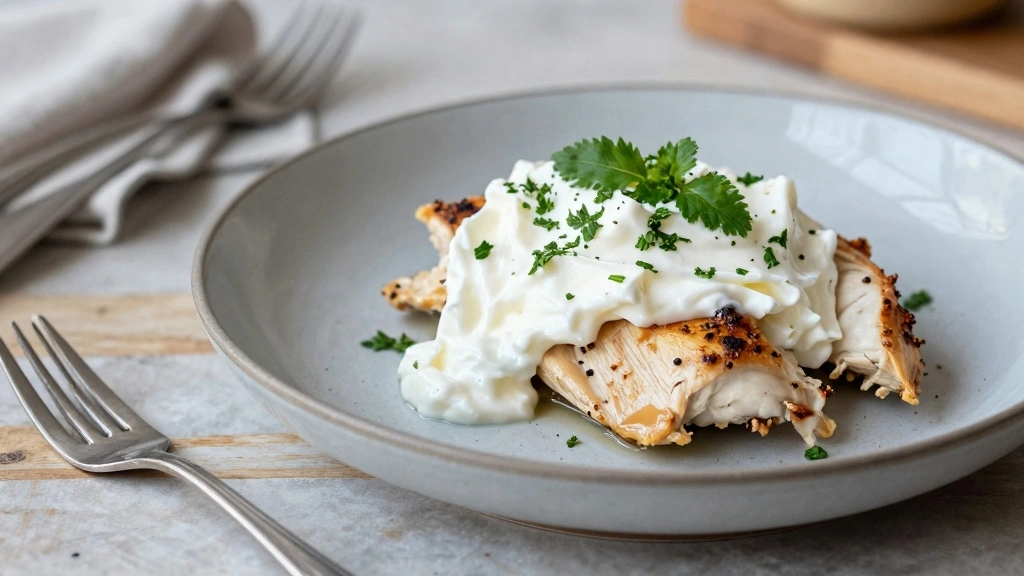


This creamy and healthy Greek Yogurt Chicken recipe is a delightful blend of tangy and savory flavors.
The rich texture of Greek yogurt combined with aromatic herbs creates a dish that’s both comforting and nutritious.
I first encountered this recipe during a summer trip to Greece, where it was a staple in local households.
It’s perfect for a quick weeknight dinner or a special weekend meal with friends.
The freshness of the ingredients and simplicity of preparation make it an instant favorite.
Whether you’re a seasoned cook or a beginner, this recipe promises to deliver impressive results.
The History and Cultural Significance
• The dish evolved over decades as Greek yogurt became more popular globally, eventually becoming the beloved version we know today.
• In Greece, this dish traditionally appears at family gatherings and communal feasts, symbolizing hospitality and warmth.
• While many variations exist across different regions, the authentic version maintains a tangy yogurt marinade that sets it apart from imitations.


Recipe Overview
Nutritional Information (per serving)
Essential Equipment Guide
Mixing Bowl: Necessary for combining ingredients thoroughly, ensuring the chicken is evenly coated with the yogurt marinade.
Meat Thermometer: Guarantees the chicken is cooked to the correct internal temperature, preventing overcooking and ensuring juiciness.

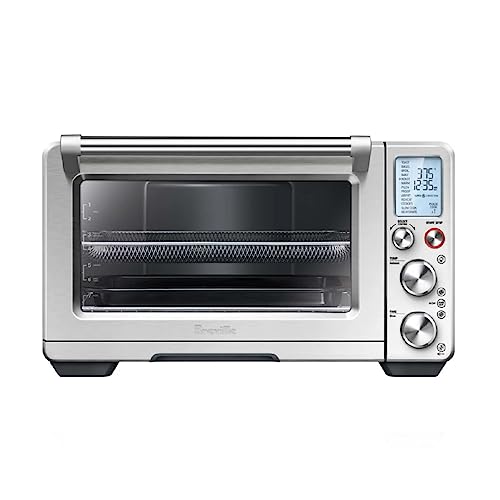
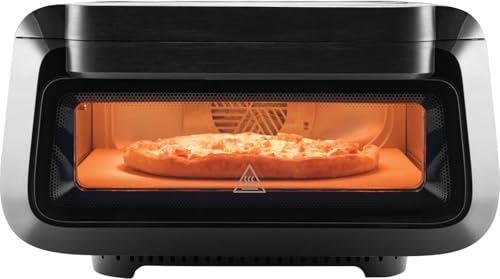
Ingredients
For the Marinade
| Amount | Ingredient | Notes |
|---|---|---|
| 1 cup | Greek yogurt | provides tanginess and creaminess |
| 2 tablespoons | olive oil | adds richness and helps in marinating |
| 3 cloves | garlic | minced for aromatic flavor |
| 1 tablespoon | lemon juice | adds freshness |
| 1 teaspoon | salt | enhances flavor |
| 1 teaspoon | black pepper | adds a hint of spice |
Seasonings
| Amount | Ingredient | Notes |
|---|---|---|
| 1 teaspoon | dried oregano | adds authentic Greek flavor |
| 1 teaspoon | paprika | adds color and mild heat |
For the Chicken
| Amount | Ingredient | Notes |
|---|---|---|
| 4 pieces | chicken breasts | boneless and skinless, main protein component |


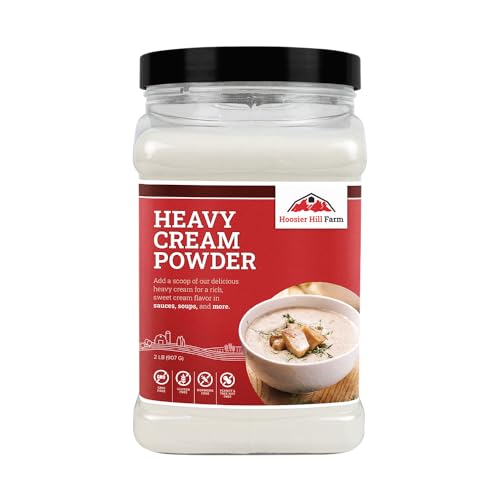
Preparation Methods
Searing: Cooking the chicken quickly over high heat to create a caramelized crust while locking in juices. A well-heated skillet is crucial for this technique.
Baking: Finishing the chicken in the oven ensures even cooking throughout. Monitoring the oven temperature is key to prevent drying out the chicken.
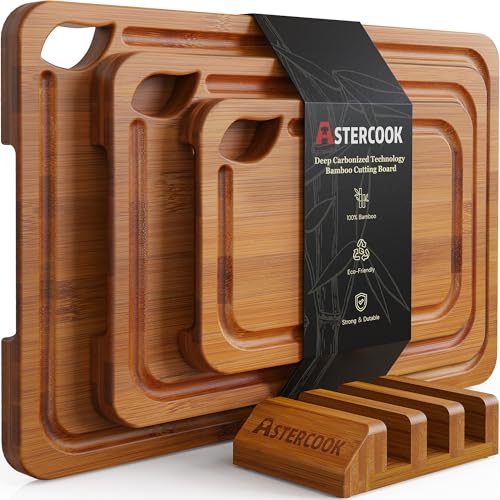

Step 1: Prepare Ingredients
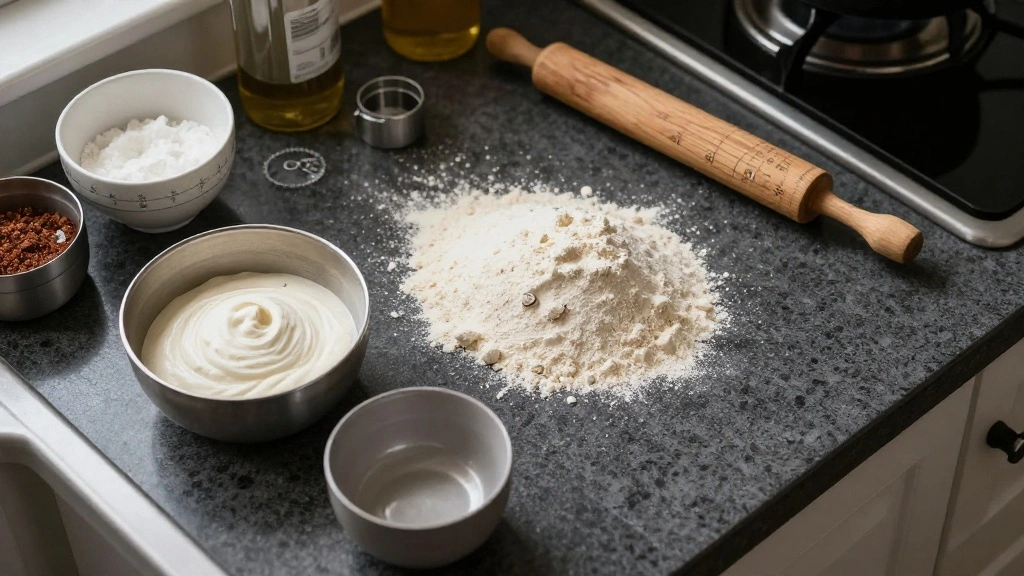
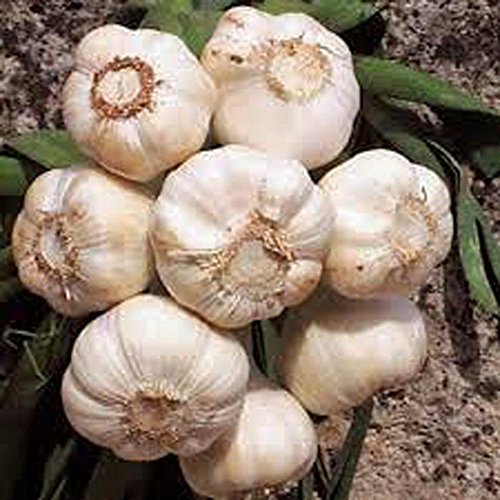
Make sure the garlic is minced and lemon is juiced.
Set the chicken breasts aside, ready for marination.
Having everything prepped ensures a smooth cooking process.


Step 2: Mix Marinade
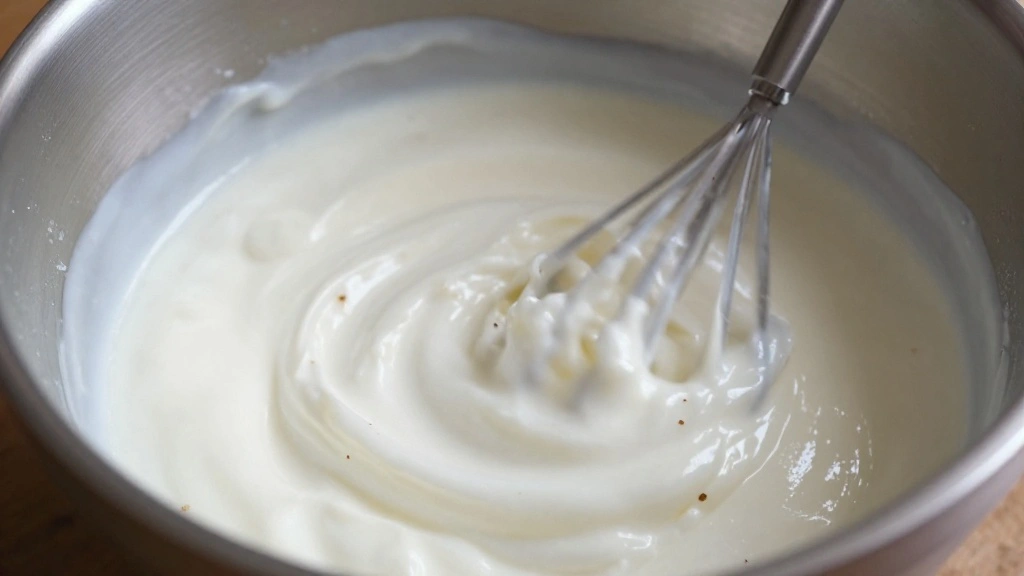
Whisk the ingredients together until smooth and well combined.
The marinade should be thick and creamy, coating the back of a spoon.
Ensure no lumps of yogurt remain for even flavor distribution.
Step 3: Marinate Chicken
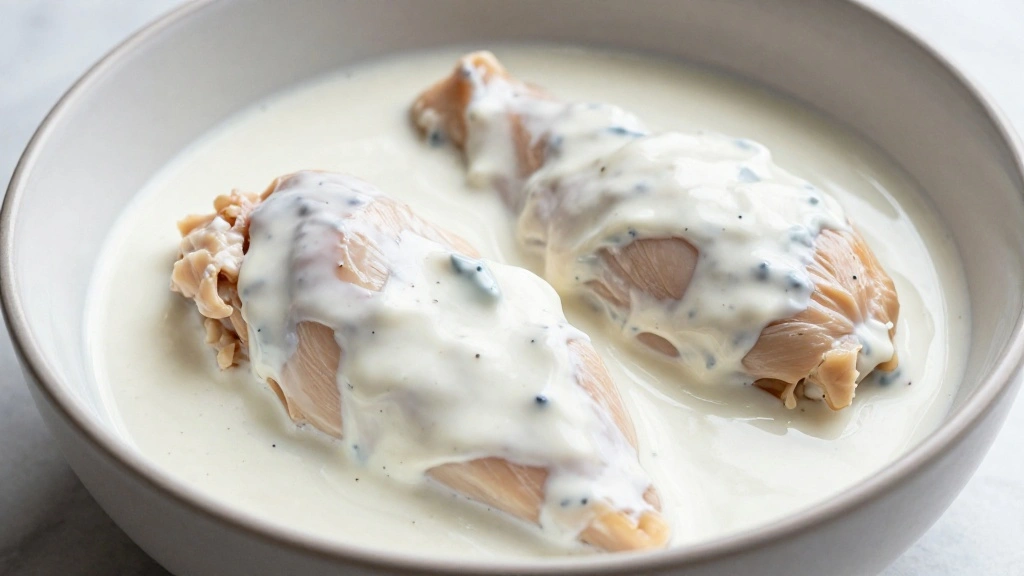
Use a spoon or your hands to thoroughly coat each piece of chicken.
Cover the bowl with plastic wrap and refrigerate for at least 30 minutes.
Longer marination times, up to 2 hours, will enhance flavor infusion.
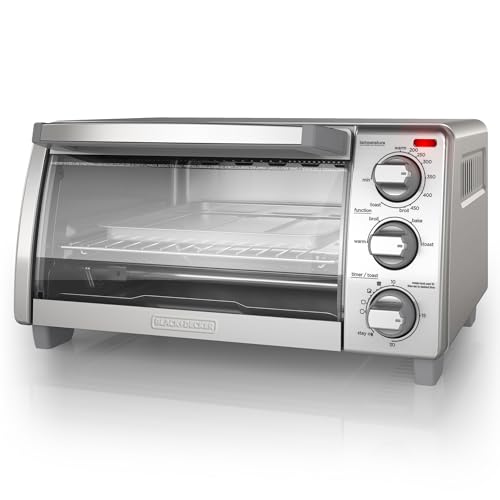
Step 4: Preheat Oven
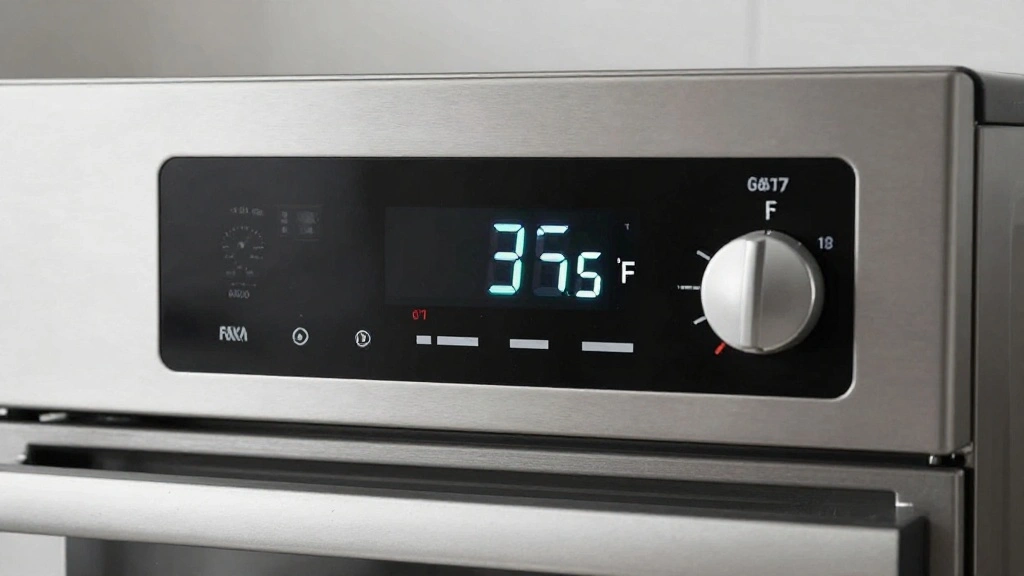
Ensure the oven rack is positioned in the middle for even heat distribution.
Preheating is crucial to maintain cooking times and ensure thorough cooking.
A properly preheated oven ensures the chicken cooks evenly and retains moisture.


Step 5: Heat Skillet
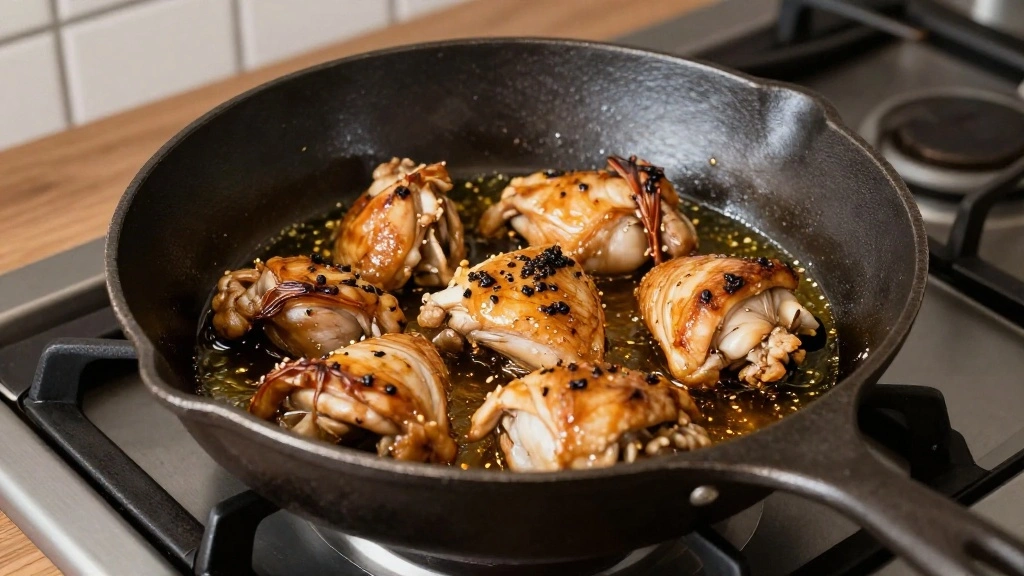
Add a small amount of olive oil to coat the bottom of the skillet.
Heat until the oil shimmers but is not smoking.
This step is crucial for achieving a good sear on the chicken.
Step 6: Sear Chicken
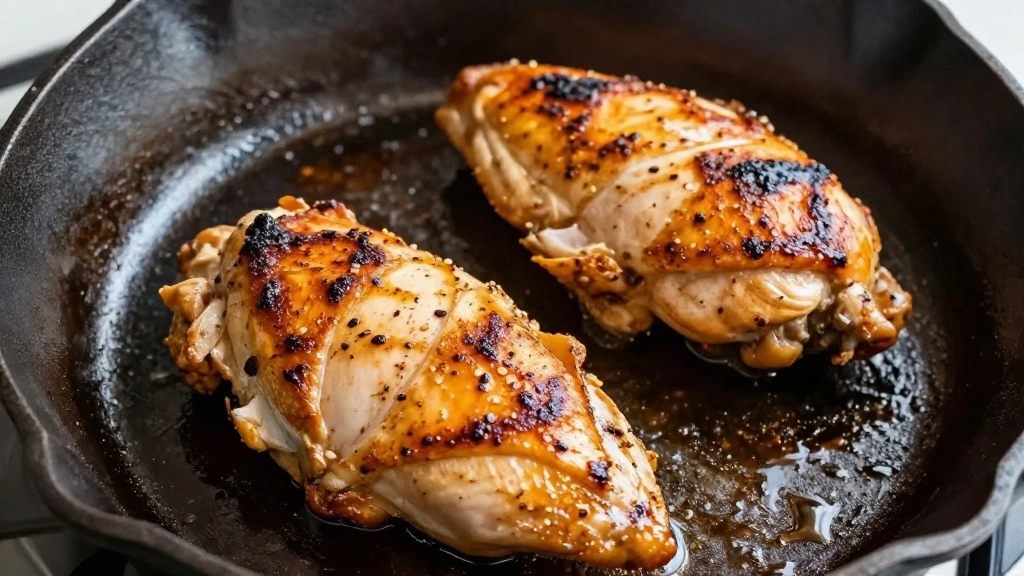
Place chicken in the hot skillet, ensuring not to overcrowd.
Sear each side for about 2-3 minutes until golden brown.
This step locks in juices and adds a flavorful crust.
Step 7: Transfer to Oven
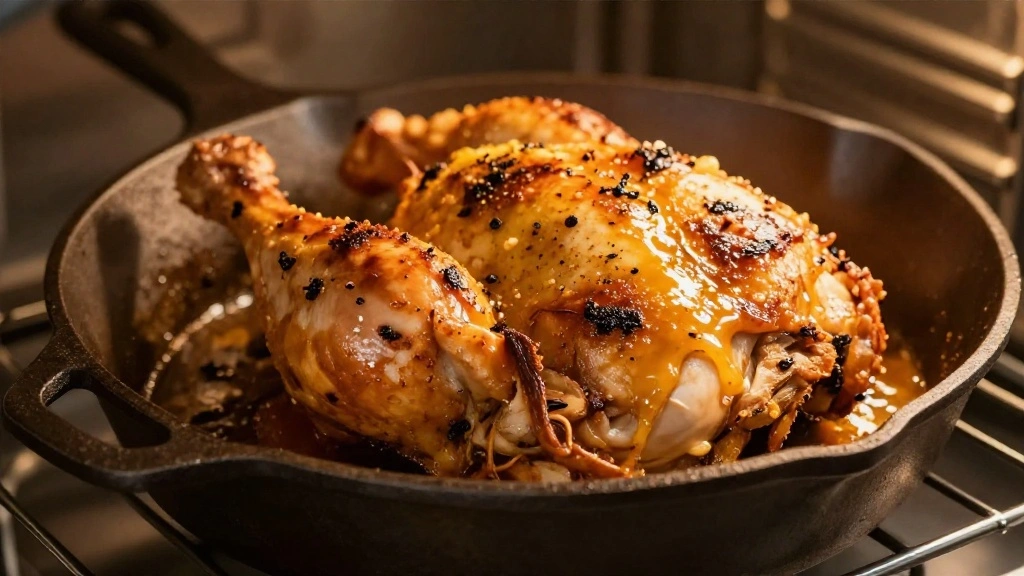
Bake for 20-25 minutes until the chicken reaches an internal temperature of 165°F (74°C).
Use a meat thermometer to check doneness.
This ensures the chicken is cooked through while remaining juicy.
Step 8: Rest and Serve
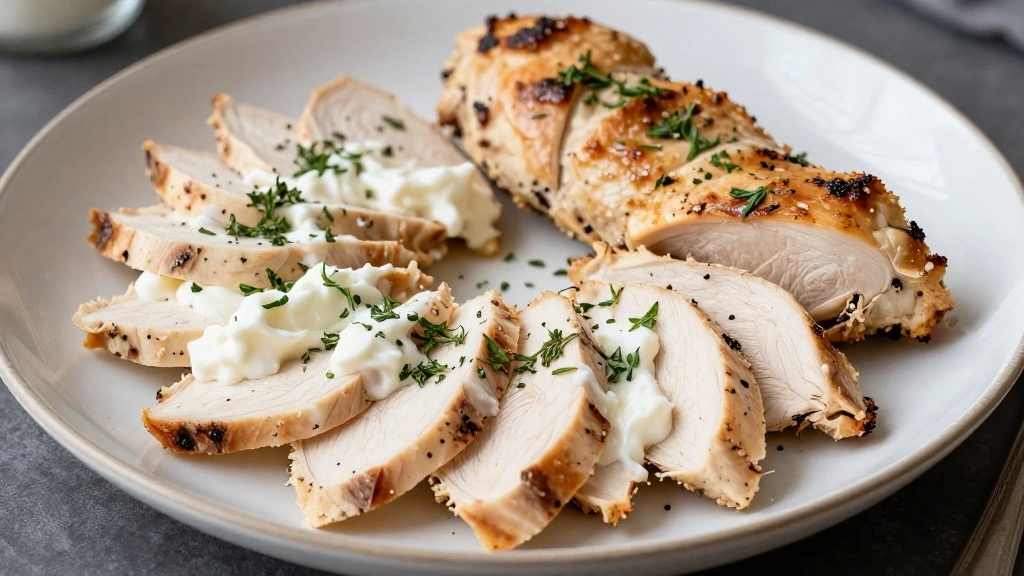
Resting allows juices to redistribute, ensuring every bite is moist.
Slice the chicken and arrange on a serving platter.
Garnish with fresh herbs like parsley or dill for added color and flavor.


Critical Timing and Temperature Guide
Searing: 2-3 minutes per side in a hot skillet until a golden crust forms. Avoid moving the chicken too soon to prevent sticking.
Baking: 20-25 minutes at 375°F (190°C) until the internal temperature reaches 165°F (74°C). Overcooking can dry out the chicken, so use a thermometer to check.
Pro Tips for Greek Yogurt Chicken
• Preparation Secret: Adding a touch of honey to the marinade can balance the tanginess of the yogurt and enhance the overall flavor.
• Temperature Management: Ensure chicken is at room temperature before cooking for even heat distribution.
• Texture Enhancement: Pat the chicken dry before marinating to help the marinade adhere better and create a better sear.
• Flavor Layering: Incorporate fresh herbs like dill or parsley into the marinade for an extra layer of flavor.
• Make-Ahead Strategies: Prepare the marinade a day in advance and store it in the refrigerator to deepen the flavors.
• Restaurant-Quality Finishing Touches: Finish with a sprinkle of feta cheese and a squeeze of fresh lemon juice before serving.
• Equipment Optimization: Use a heavy-bottomed skillet for better heat retention and even cooking.


Troubleshooting Common Issues
• Marinade Not Sticking: Make sure the chicken is patted dry before applying the marinade.
• Bland Flavor: Increase the amount of herbs and spices in the marinade for a more robust taste.
• Uneven Cooking: Use chicken pieces of similar size and thickness to ensure even cooking times.
• Yogurt Curdling: Avoid high heat and quick temperature changes to prevent yogurt from curdling. Gentle cooking methods help maintain a smooth texture.
Variations and Regional Differences
• Middle Eastern Influence: Incorporates sumac and za’atar for a tangy, herbal twist.
• Spicy Greek Yogurt Chicken: Adds red pepper flakes or cayenne to the marinade for a kick of heat.
• Italian-Inspired: Uses basil and oregano with a splash of balsamic vinegar for an Italian touch.


Food Science Behind the Recipe
• Emulsification: Olive oil in the marinade helps emulsify the mixture, allowing for better adhesion to the chicken surface.
• Maillard Reaction: Searing the chicken at high heat causes proteins and sugars to undergo the Maillard reaction, creating a flavorful crust.
Frequently Asked Questions
Can I use non-fat yogurt instead? While possible, non-fat yogurt may result in a less creamy texture, so full-fat is recommended for best results.
How long can I store leftovers? Store in an airtight container in the refrigerator for up to 3 days for optimal freshness.
Can this dish be frozen? Yes, freeze the marinated chicken before cooking for up to 2 months. Thaw completely before proceeding with the recipe.
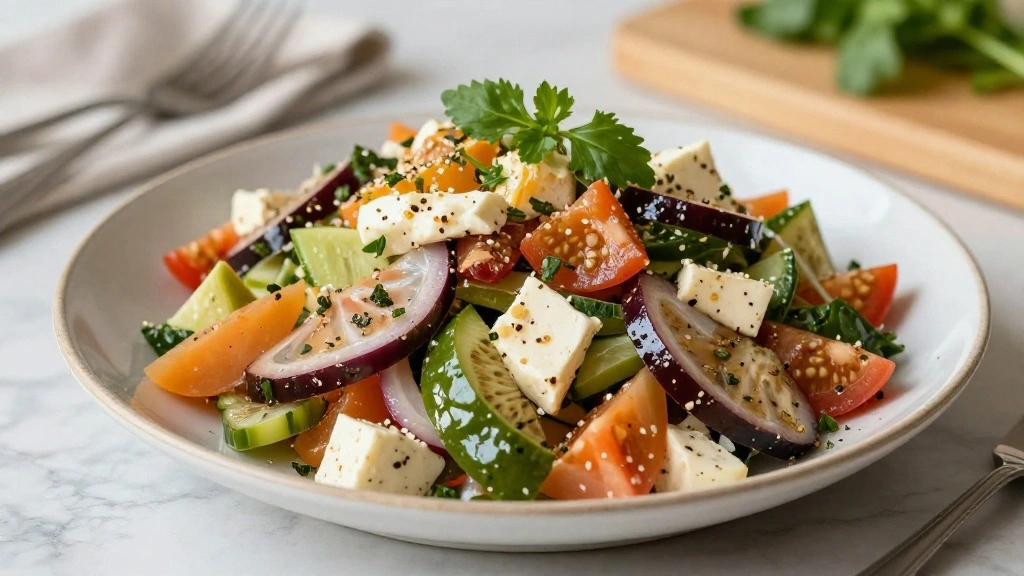
What sides pair well with Greek Yogurt Chicken? Sides like roasted vegetables, couscous, or a Greek salad complement the flavors well.
Is there a vegan version of this recipe? Substitute chicken with tofu and use a dairy-free yogurt for a vegan alternative.
Can I grill the chicken instead of baking? Yes, grilling adds a smoky flavor. Adjust cooking times accordingly and ensure internal temperature reaches 165°F (74°C).
Serving and Presentation Guide
• Modern Plating: Slice chicken and fan out on individual plates with a drizzle of olive oil and a sprinkle of feta cheese.
• Family-Style: Present in a large bowl with sides like roasted potatoes or a vibrant salad.
• Casual Buffet: Arrange on a serving tray with skewers for easy self-service at gatherings.


Conclusion
With its creamy texture and robust flavors, it’s sure to become a family favorite.
Give this recipe a try, and enjoy the delightful combination of tangy yogurt and tender chicken.
Experience a culinary journey to Greece from the comfort of your kitchen.