
Written by

Edited by

Affiliate Disclosure:
If you buy through links on our site, we may earn a small affiliate commission to help support the blog – at no extra cost to you. It never influences our product selection process. Thank you!
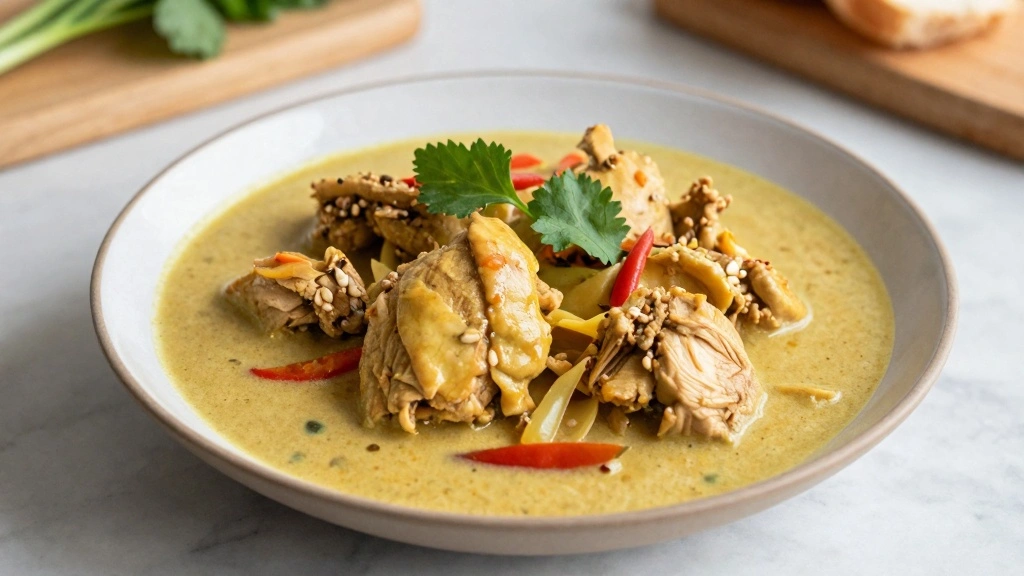
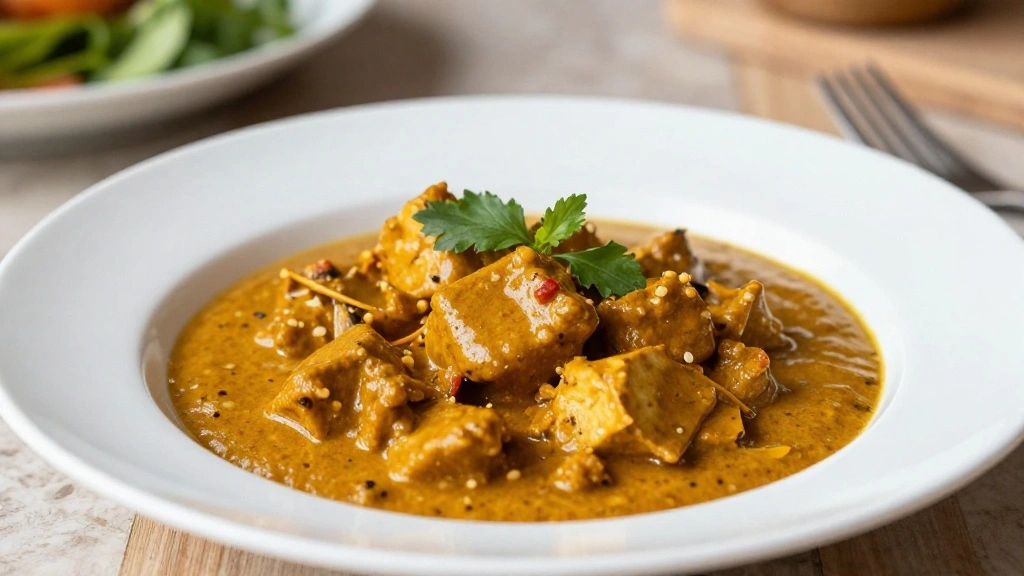
The rich aroma of Thai Chicken Curry Soup immediately transports you to the vibrant streets of Bangkok.
The harmonious blend of coconut milk, lemongrass, and spicy chili paste creates a comforting yet exotic dining experience.
I first encountered this dish during a memorable trip to Thailand, where it was lovingly prepared by a local chef who shared his family recipe.
This one-pot wonder is perfect for chilly evenings when you crave something warm and flavorful.
Whether you’re a seasoned cook or a novice in the kitchen, this recipe is approachable and rewarding.
Gather your ingredients and prepare to embark on a culinary journey that will delight your taste buds.
• The dish evolved over decades as the use of coconut milk and fresh herbs became more prevalent, eventually becoming the beloved version we know today.
• In Thai culture, this dish traditionally appears at family gatherings and festivals, symbolizing community and warmth.
• While many variations exist across different regions, the authentic version maintains a balance of sweet, savory, and spicy flavors that sets it apart from imitations.
Mortar and Pestle: This tool is crucial for crushing and blending spices to release their full flavor potential. An electric spice grinder can be used as an alternative, but the traditional method is preferred for its authenticity. Choose a sturdy stone set for best results.
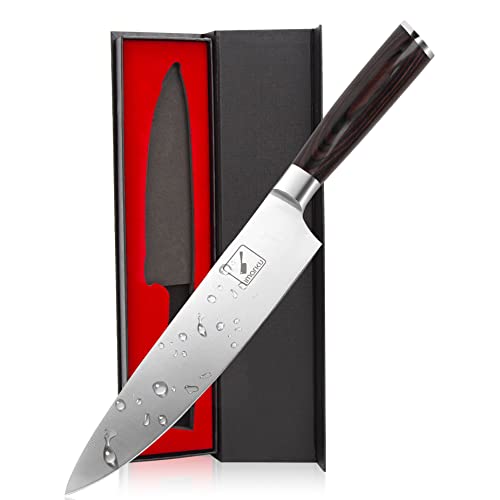
Sharp Chef’s Knife: A sharp knife ensures precision when slicing chicken and vegetables, which is important for even cooking and presentation. If a chef’s knife isn’t available, a santoku knife is a good alternative. Regularly sharpen the blade for clean cuts.
| Amount | Ingredient | Notes |
|---|---|---|
| 2 tablespoons | vegetable oil | for sautéing |
| 1 pound | chicken breast | sliced thinly for even cooking |
| Amount | Ingredient | Notes |
|---|---|---|
| 1 cup | bell peppers | sliced, adds sweetness |
| 1 cup | carrots | julienned, adds crunch |
| Amount | Ingredient | Notes |
|---|---|---|
| 2 tablespoons | red curry paste | provides heat |
| 1 tablespoon | fish sauce | adds umami |
| Amount | Ingredient | Notes |
|---|---|---|
| 1 can | coconut milk | adds richness |
| 2 cups | chicken broth | base for soup |
| Amount | Ingredient | Notes |
|---|---|---|
| 1 tablespoon | lemongrass | minced, for aroma |
| 1 tablespoon | ginger | grated, adds warmth |
Simmering: Simmering allows the ingredients to meld together, creating a harmonious blend of flavors. Keep the heat low and cover the pot to maintain moisture and prevent boiling, which can make the chicken tough.
Mincing Lemongrass: Properly mincing lemongrass releases its essential oils, adding a citrusy aroma to the soup. Use the back of a knife to bruise the stalk before mincing, enhancing its flavor release.
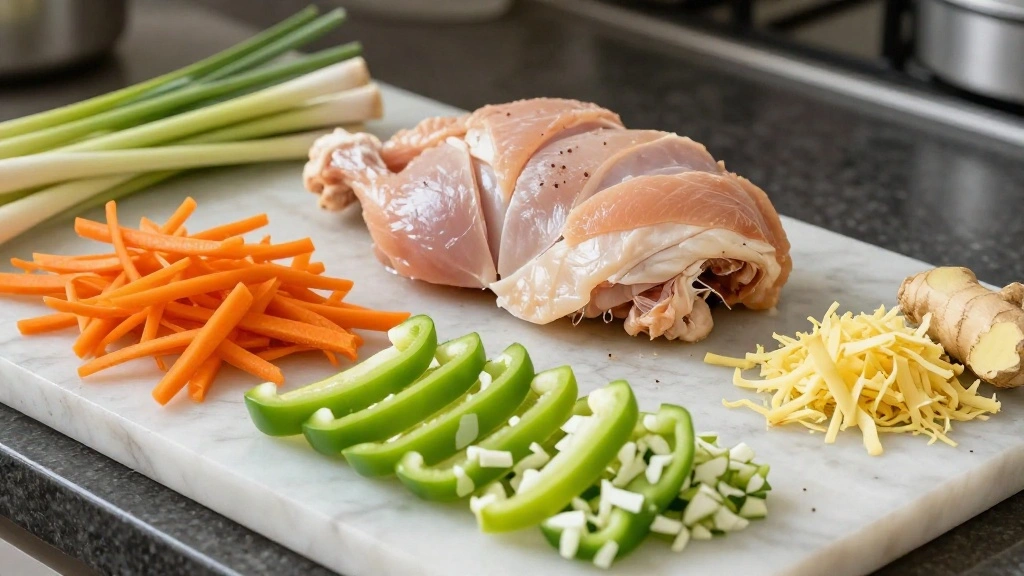
Slice the chicken breasts thinly to ensure even cooking.
Julienne the carrots and slice the bell peppers.
Mince the lemongrass and grate the ginger for added flavor.
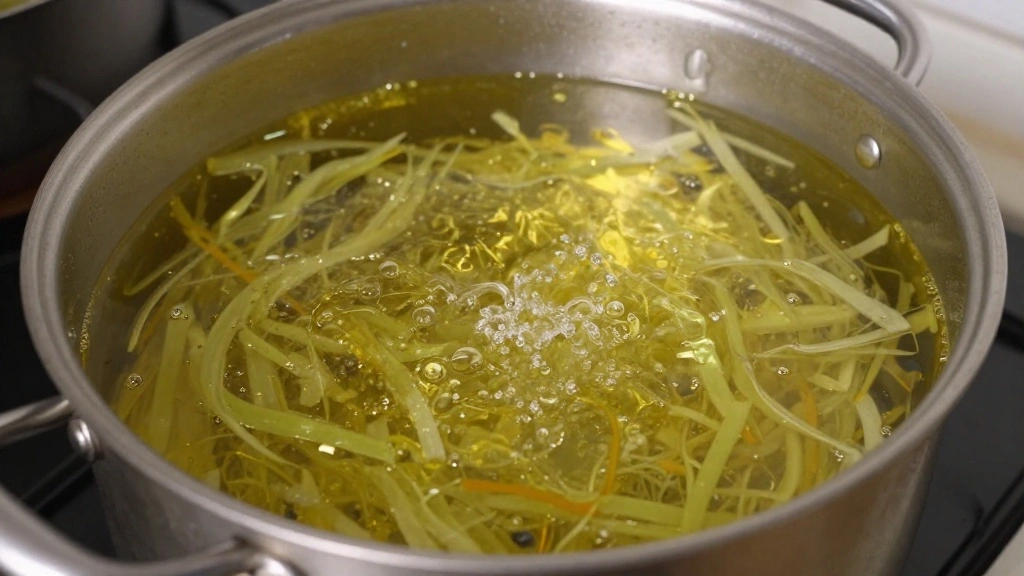
Allow the oil to heat until shimmering, indicating it’s ready.
Ensure the oil covers the bottom of the pot evenly.
Avoid overheating to prevent burning the oil.
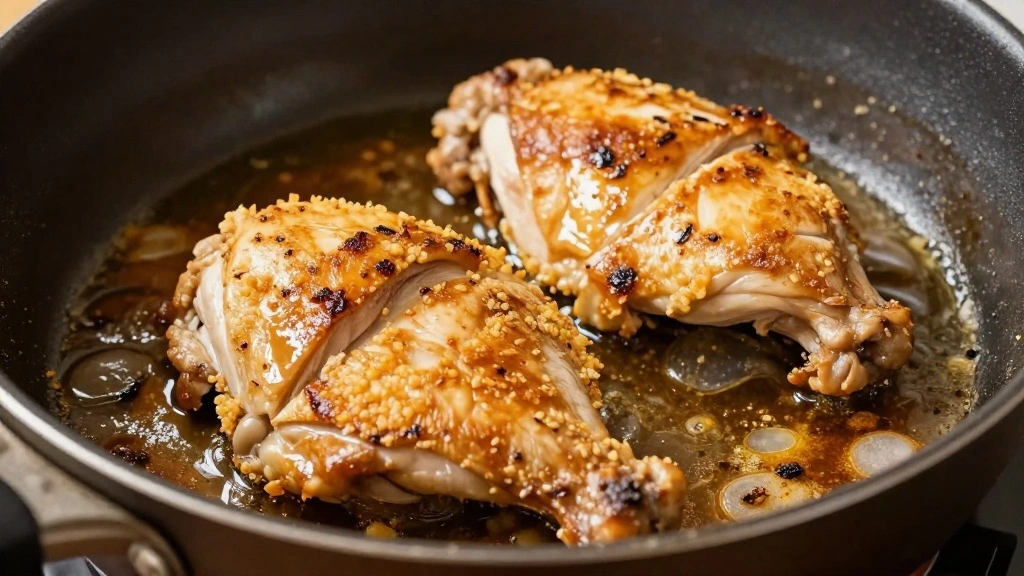
Cook for 3-4 minutes on each side until golden brown.
Ensure the chicken is cooked through with no pink remaining.
Remove the chicken and set aside once browned.
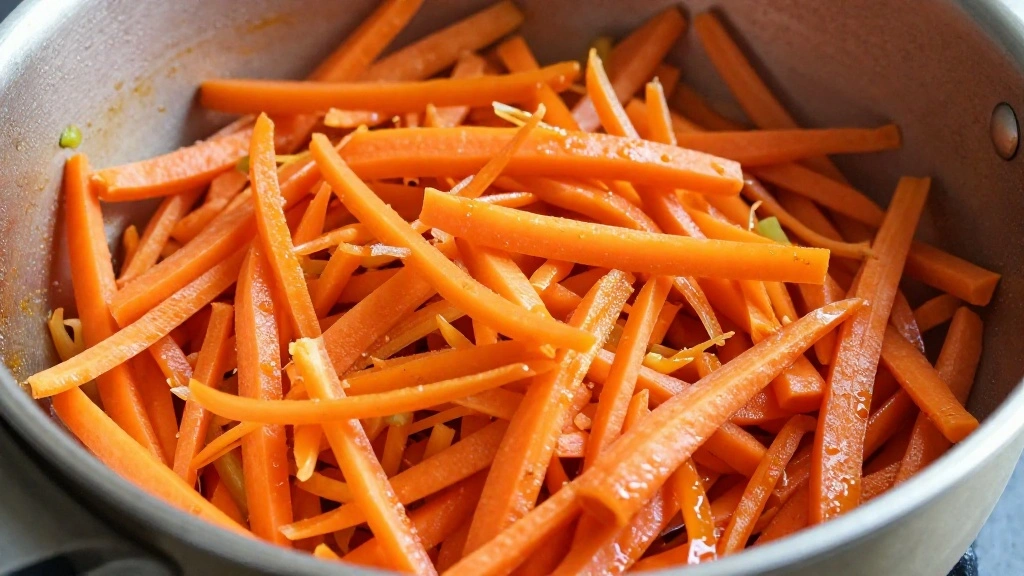
Sauté for 5 minutes until the vegetables soften slightly.
Stir occasionally to prevent sticking.
Avoid overcooking to maintain some crunch.
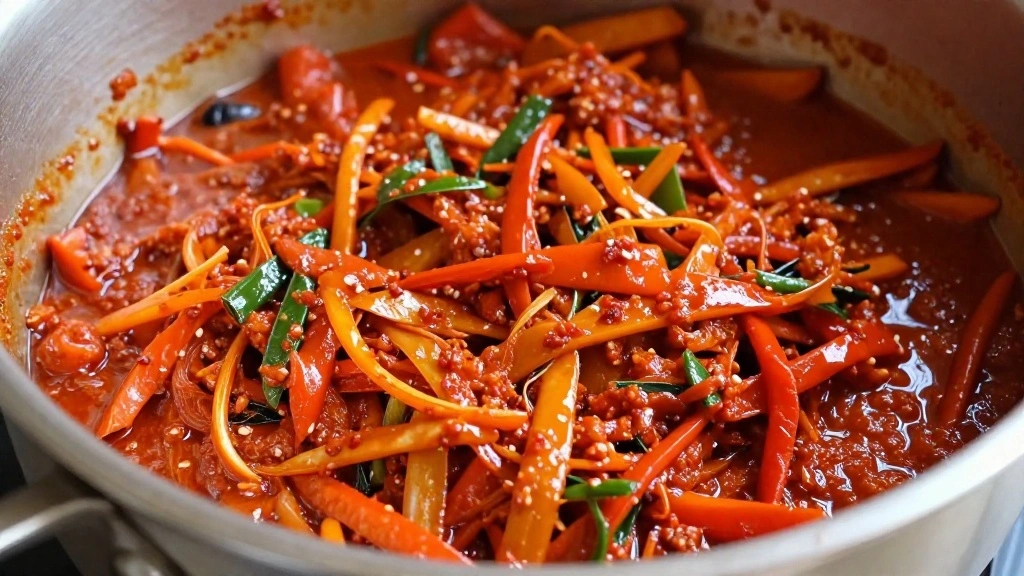
Stir to coat the vegetables evenly with the paste.
Cook for 2-3 minutes until fragrant.
Ensure the paste is well incorporated into the vegetables.
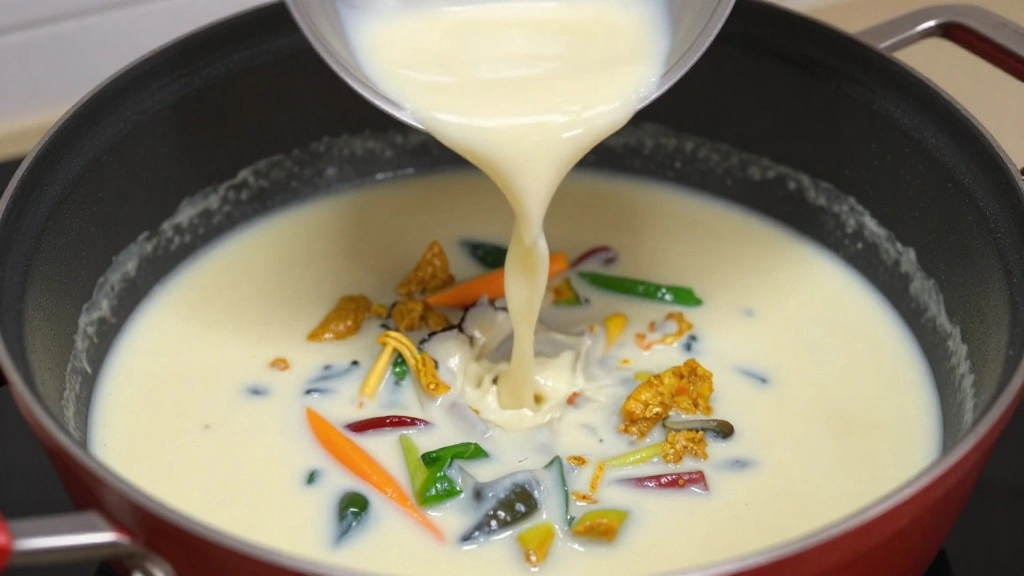
Stir to combine with the curry paste and vegetables.
Bring the mixture to a gentle simmer.
Avoid boiling to prevent curdling of the coconut milk.
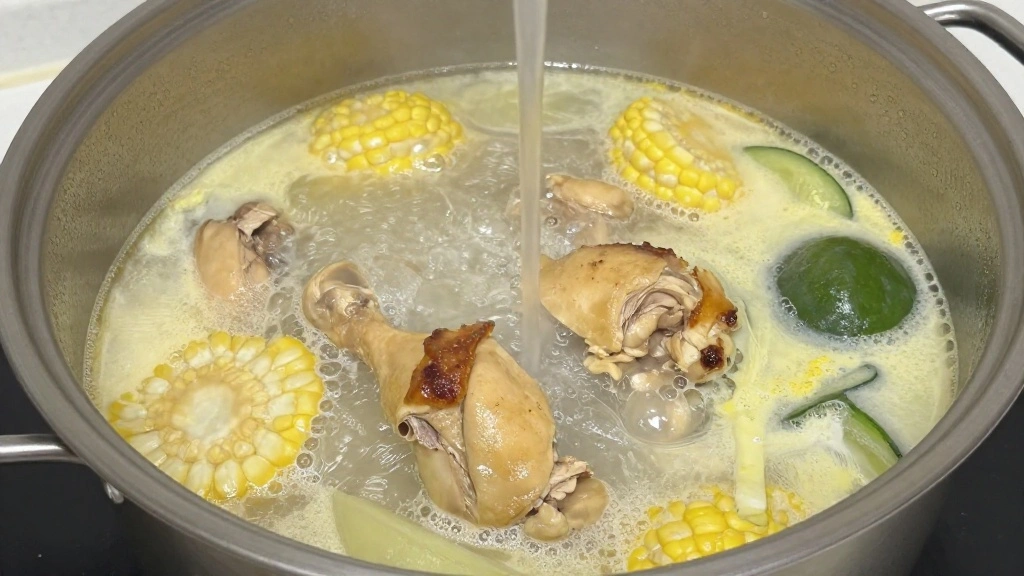
Return the browned chicken to the pot.
Bring the mixture back to a simmer.
Ensure the chicken is submerged for even cooking.
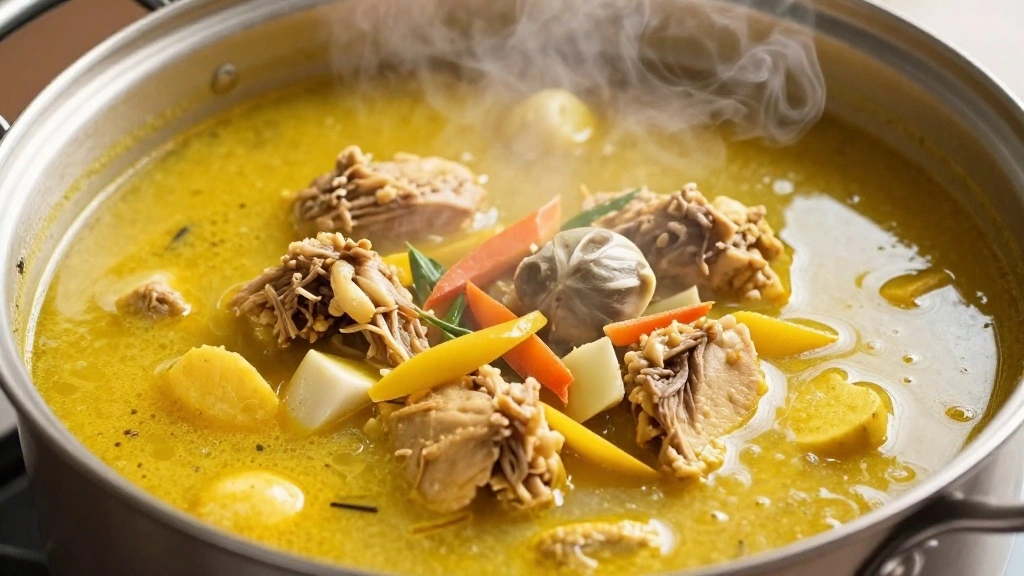
Simmer for 15-20 minutes to meld flavors.
Taste and adjust seasoning if necessary.
Look for a balanced taste of savory, spicy, and sweet.
Simmering Soup: Maintain a gentle simmer at medium-low heat for 15-20 minutes. Avoid boiling to prevent tough chicken and curdled coconut milk. Look for occasional bubbles breaking the surface.
Heating Oil: Heat oil until shimmering but not smoking, which usually takes 2-3 minutes over medium heat. Overheated oil can lead to burnt flavors.
• Preparation Secret: Let the curry paste bloom in the oil for a few minutes to enhance its aroma and depth.
• Temperature Management: Use medium heat to maintain a gentle simmer, preventing the coconut milk from curdling.
• Texture Enhancement: Avoid overcooking vegetables to maintain a pleasant crunch that contrasts with the tender chicken.
• Flavor Layering: Add fish sauce towards the end of cooking to preserve its umami punch.
• Make-Ahead Strategies: Prepare the curry base a day ahead and refrigerate. Reheat gently, adding fresh vegetables and herbs before serving.
• Restaurant-Quality Finishing Touches: Garnish with fresh cilantro and lime wedges for a burst of color and freshness.
• Equipment Optimization: Use a pot with a heavy base to ensure even heat distribution, preventing hot spots.
• Coconut Milk Curdling: Prevent curdling by keeping the soup at a gentle simmer and avoiding high heat. If curdling occurs, strain the soup and reheat slowly.
• Chicken Too Tough: Ensure chicken slices are thin and cooked at the right temperature. If already tough, simmer longer until tender.
• Flavors Too Bland: Add more curry paste or fish sauce to intensify flavors. Always taste and adjust seasoning as needed.
• Vegetables Overcooked: To prevent mushy vegetables, add them later in the cooking process or briefly blanch before adding to the soup.
• Northern Thai Style: Often incorporates more herbs such as Thai basil and kaffir lime leaves, resulting in a fresher taste.
• Central Thai Classic: Focuses on a balanced sweetness and spiciness, often using palm sugar for a subtle caramel note.
• Vegetarian Adaptation: Replace chicken with tofu or tempeh and use vegetable broth to make a satisfying vegetarian version.
• Emulsification: The combination of coconut milk and curry paste creates an emulsion, providing a creamy texture and rich mouthfeel.
• Flavor Extraction: Simmering lemongrass and ginger extracts essential oils, enhancing the aromatic profile of the dish.
Can I use light coconut milk instead of regular? Yes, but the soup will be less rich and creamy. Regular coconut milk is recommended for authentic taste.
Is there a substitute for fish sauce? Soy sauce or tamari can be used as a substitute, though the flavor will differ slightly.
How can I make the soup less spicy? Reduce the amount of curry paste used, or add more coconut milk to mellow the heat.
Can this soup be frozen? Yes, but the texture may change slightly. Freeze in airtight containers and consume within 2 months.
What type of chicken is best for this recipe? Skinless, boneless chicken breasts are ideal for quick cooking and tender results.
How can I add more vegetables? Consider adding mushrooms, zucchini, or spinach for added nutrition and variety.
• Family Style: Present in a large serving bowl with a ladle, allowing guests to serve themselves.
• Plated Elegance: Serve in individual bowls with a side of jasmine rice, garnished with thinly sliced chili peppers.
• Casual Comfort: Pair with crusty bread for dipping, served in a rustic bowl with a spoon.
With its perfect balance of spice, creaminess, and aroma, this dish is sure to become a household favorite.
Embrace the simplicity of this one-pot wonder and impress your family and friends with your culinary skills.

Thai Recipes
Thai Recipes
Thai Recipes
Thai Recipes