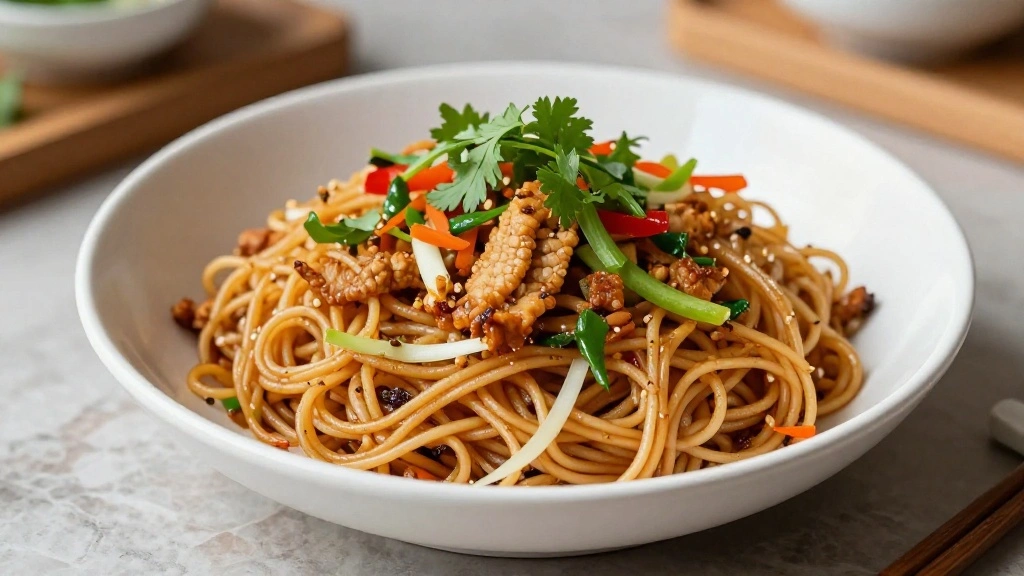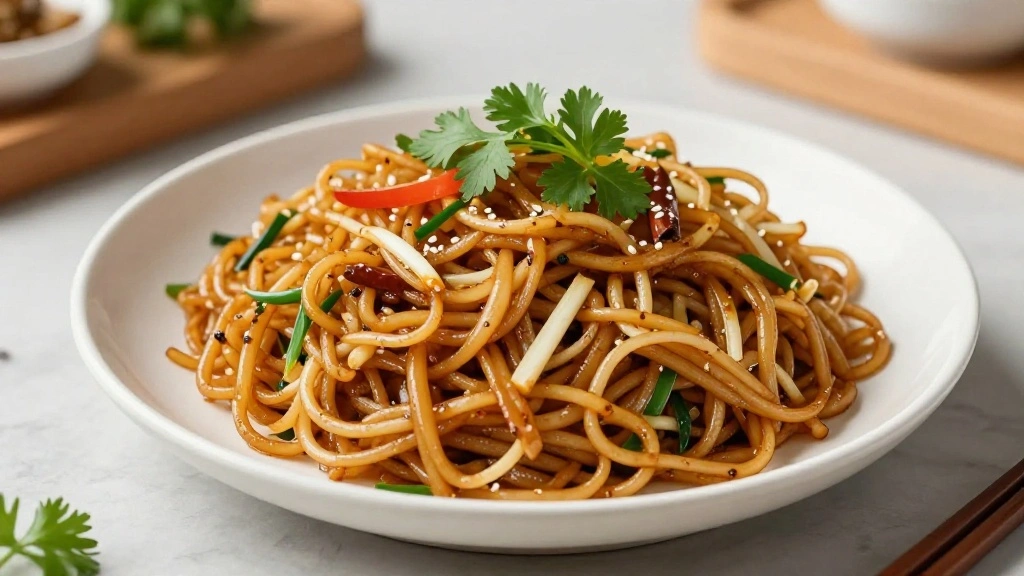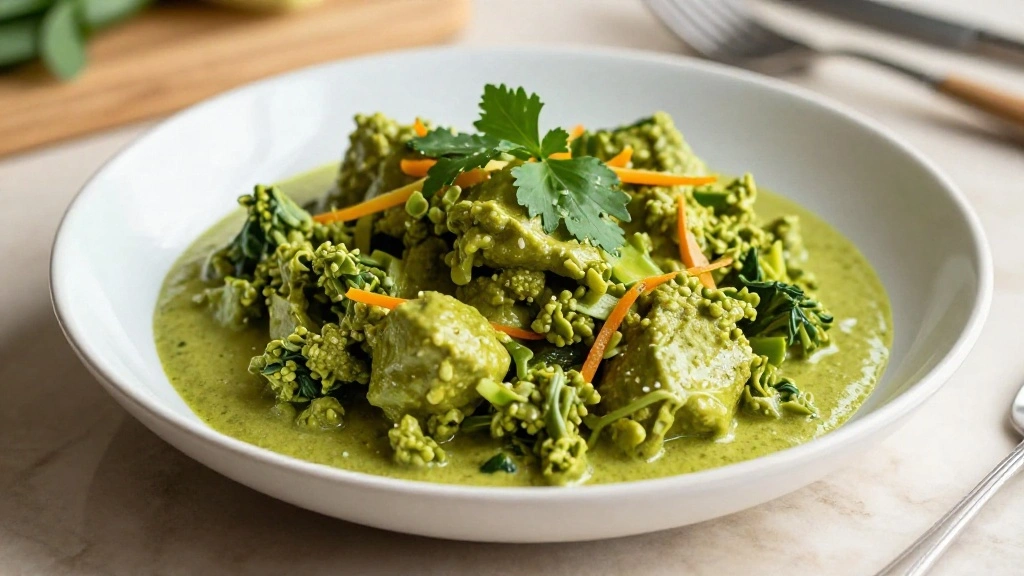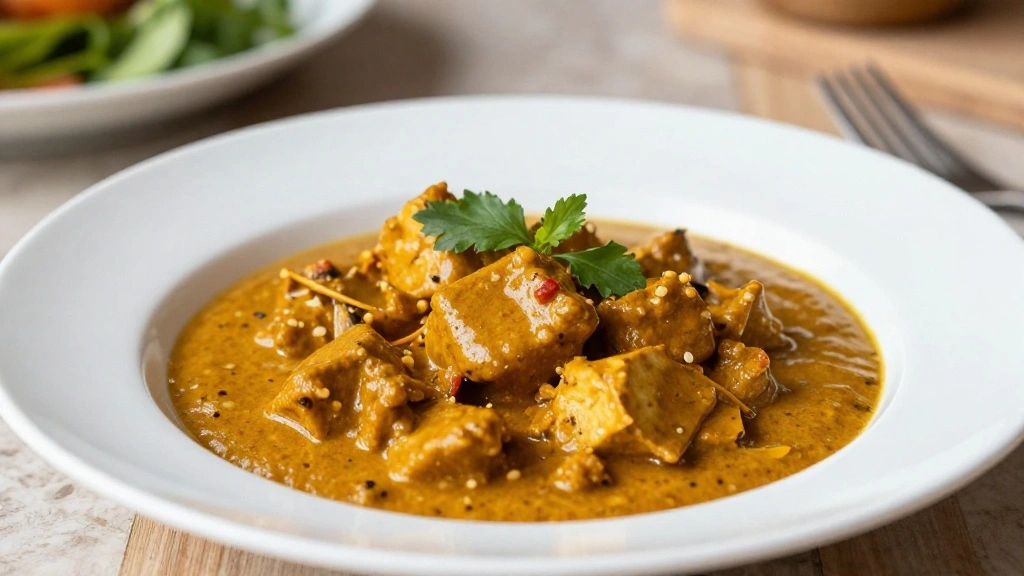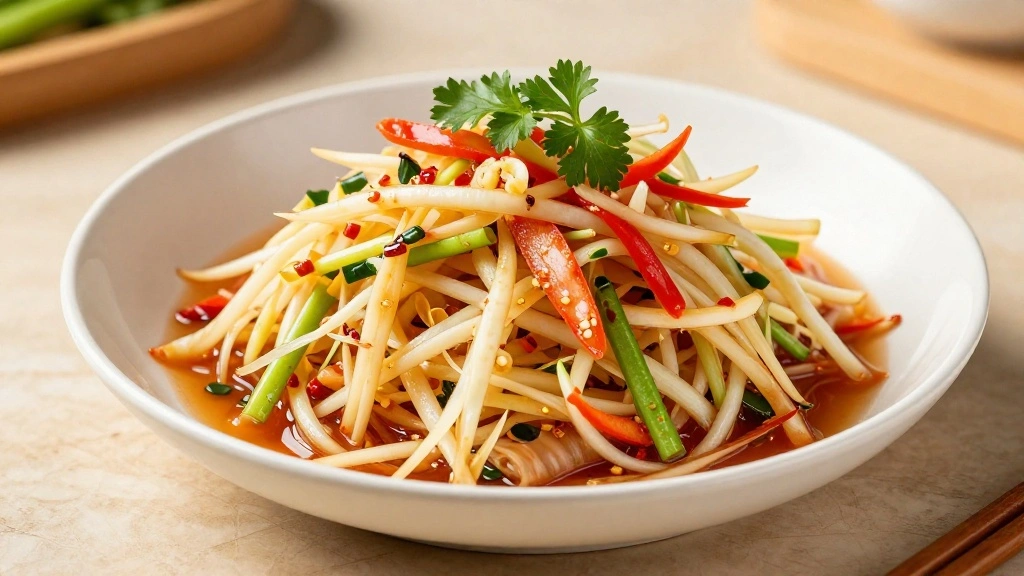

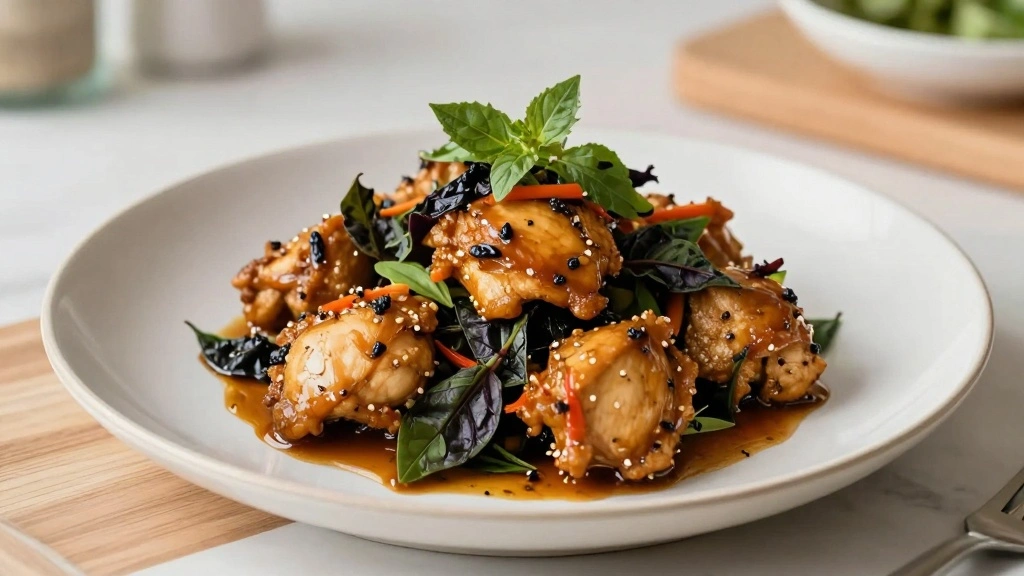


Thai Basil Chicken, known as Pad Krapow Gai, is a vibrant dish that embodies the perfect balance of savory, spicy, and aromatic flavors.
The boldness of fresh basil leaves combined with the heat of chilies makes it a memorable meal that awakens the senses.
During my trip to Thailand, I experienced this dish’s unique flavors and immediately fell in love with its simplicity and depth.
It’s a versatile dish that can be served as a quick weeknight dinner or as an impressive dish for guests.
The beauty of Thai Basil Chicken lies in its straightforward preparation and the aromatic burst it delivers with each bite.
The History and Cultural Significance
• The dish evolved over decades as Thai chefs experimented with different types of basil and meats, eventually becoming the beloved version we know today.
• In Thai culture, this dish traditionally appears at family gatherings and street festivals, symbolizing warmth and hospitality.
• While many variations exist across different regions, the authentic version maintains its signature spicy and aromatic profile that sets it apart from imitations.


Recipe Overview
Nutritional Information (per serving)
Essential Equipment Guide
Mortar and Pestle: This traditional tool is used to crush the garlic and chilies, releasing their essential oils and flavors. A food processor can be used as a substitute, but it may not provide the same texture.
Rice Cooker: Cooking rice to accompany the dish is simplified with a rice cooker, which ensures perfectly cooked rice every time. Alternatively, a pot with a tight-fitting lid can also be used for stove-top rice cooking.


Ingredients
For the Base
| Amount | Ingredient | Notes |
|---|---|---|
| 1 pound | chicken breast | thinly sliced for quick cooking |
| 2 tablespoons | vegetable oil | for stir-frying |
For the Sauce
| Amount | Ingredient | Notes |
|---|---|---|
| 3 tablespoons | soy sauce | adds umami |
| 1 tablespoon | oyster sauce | enhances richness |
| 1 teaspoon | sugar | balances flavors |
Vegetables
| Amount | Ingredient | Notes |
|---|---|---|
| 1 cup | Thai basil leaves | adds aromatic freshness |
| 2 medium | red chilies | sliced, for heat |
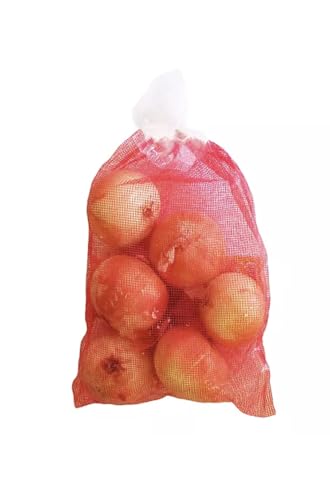
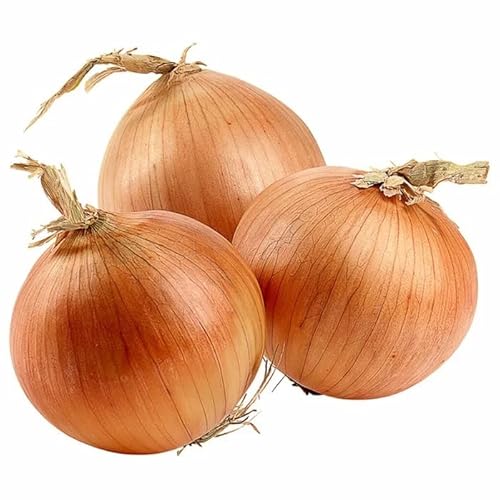
| 1 medium | onion | sliced |
Seasonings
| Amount | Ingredient | Notes |
|---|---|---|
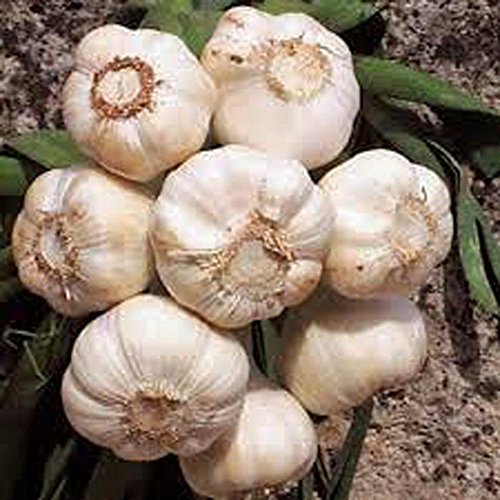
| 4 cloves | garlic | crushed |
| 1 tablespoon | fish sauce | for depth of flavor |


Preparation Methods
Ingredient Marination: Although not traditionally marinated, allowing the chicken to sit in a soy sauce mixture for a few minutes can enhance flavor absorption. Keep the marination short to avoid overpowering the dish.
Herb Crushing: Using a mortar and pestle to crush garlic and chilies is crucial for releasing oils that intensify the dish’s flavor. Apply steady pressure and grind in a circular motion.

Step 1: Prepare Ingredients
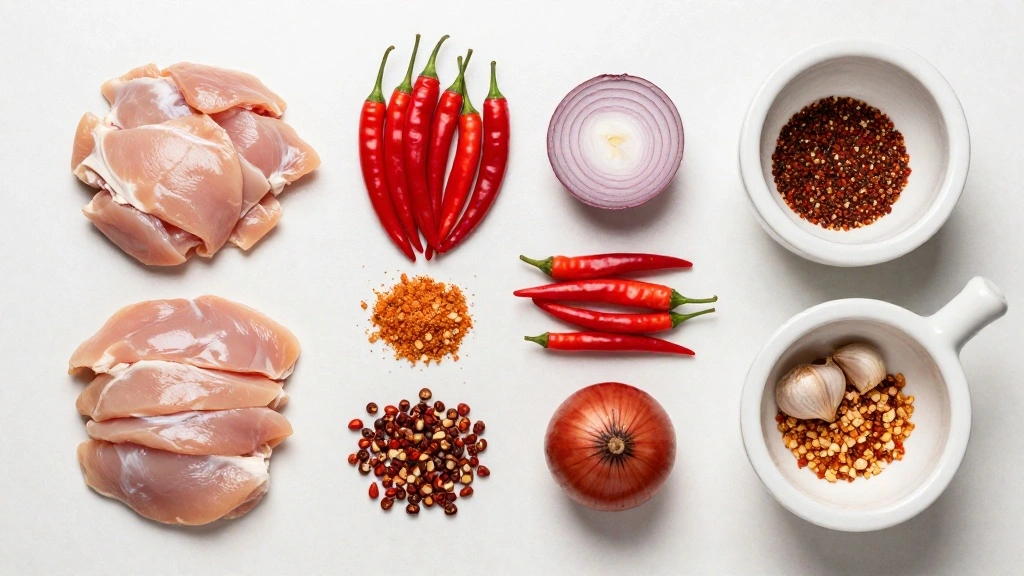
Thinly slice the chicken breast and set aside.
Slice the red chilies and onion, keeping them separate.
Crush the garlic using a mortar and pestle until it forms a paste.

Step 2: Make the Sauce
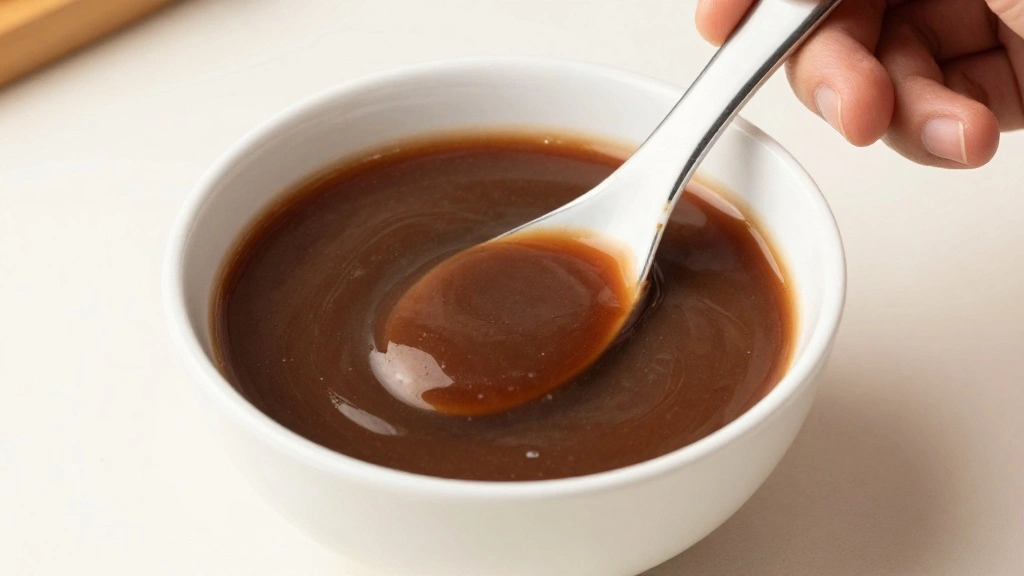
Stir the mixture until the sugar is fully dissolved.
Adjust taste as needed, balancing salty and sweet flavors.
Set the sauce aside for later use.


Step 3: Heat the Wok
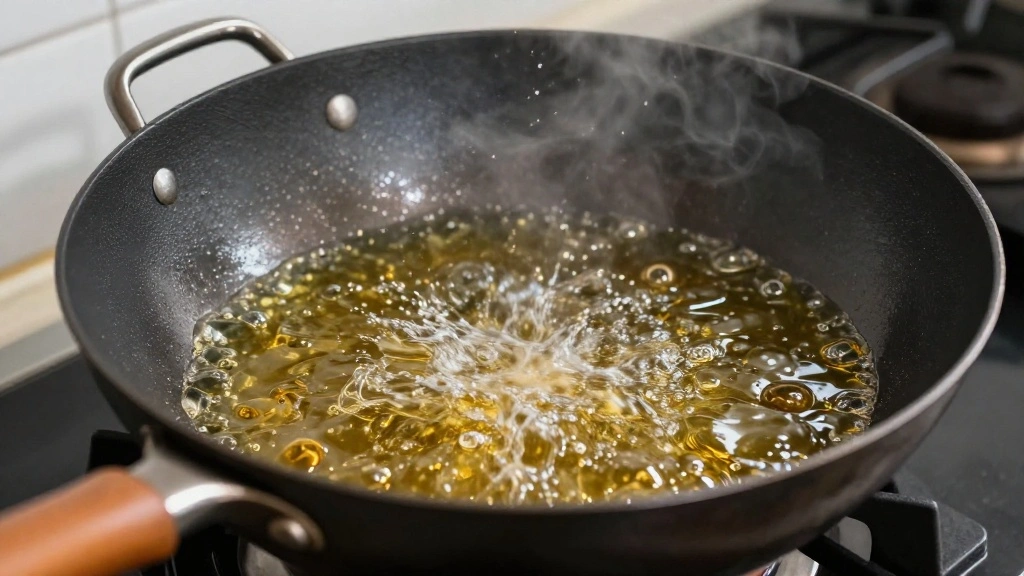
Allow the oil to heat until it shimmers but does not smoke.
The high heat ensures quick cooking and seals in flavors.
Ensure the wok is evenly coated with oil.
Step 4: Cook the Chicken
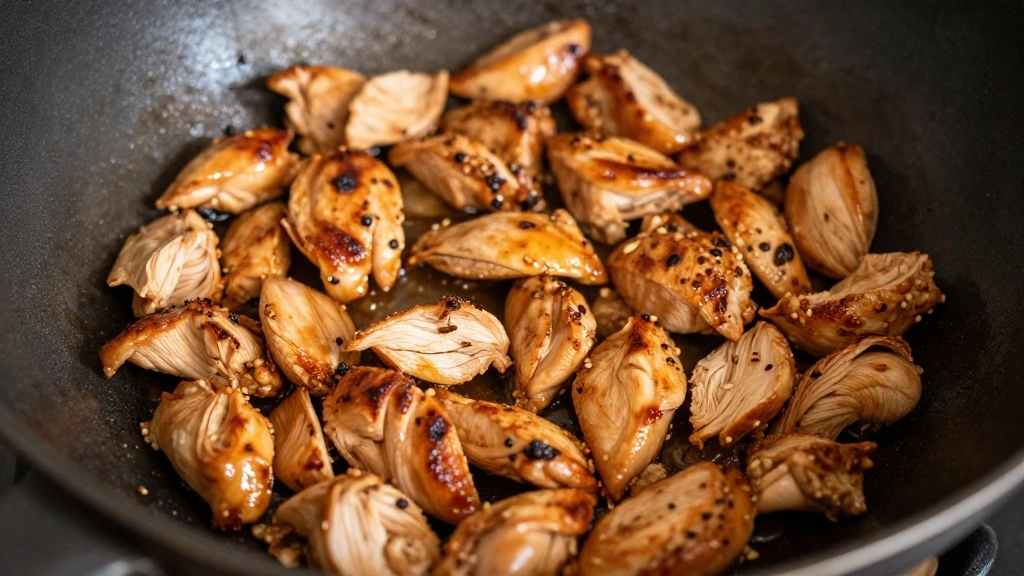
Stir-fry quickly, keeping the chicken moving to prevent sticking.
Cook until the chicken is no longer pink and is starting to brown.
Remove the chicken from the wok and set aside.



Step 5: Stir-Fry the Aromatics
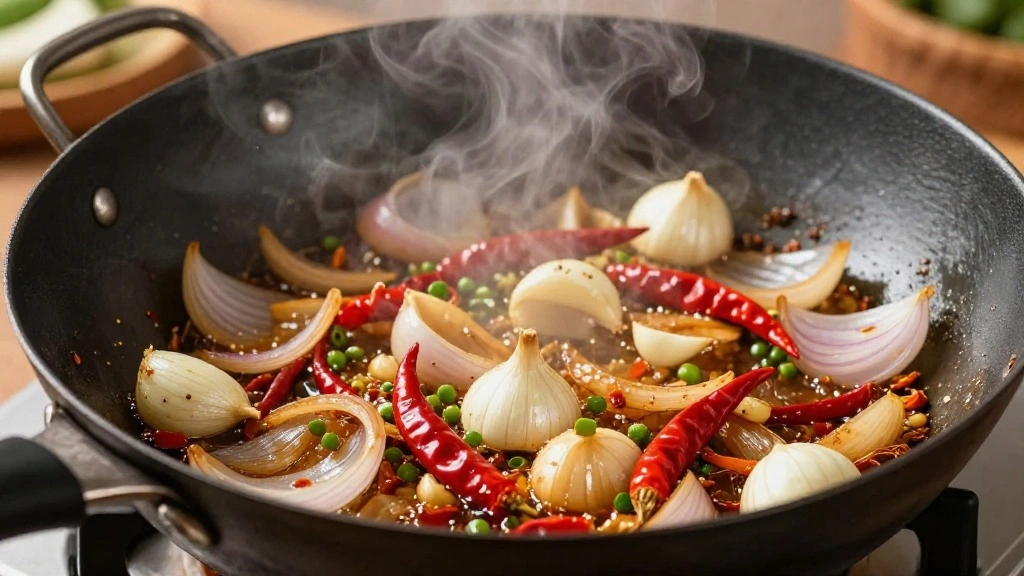
Stir-fry briefly until the garlic turns golden and fragrant.
Be careful not to burn the garlic as it will become bitter.
Add the sliced onion and continue to stir-fry until softened.


Step 6: Combine Ingredients
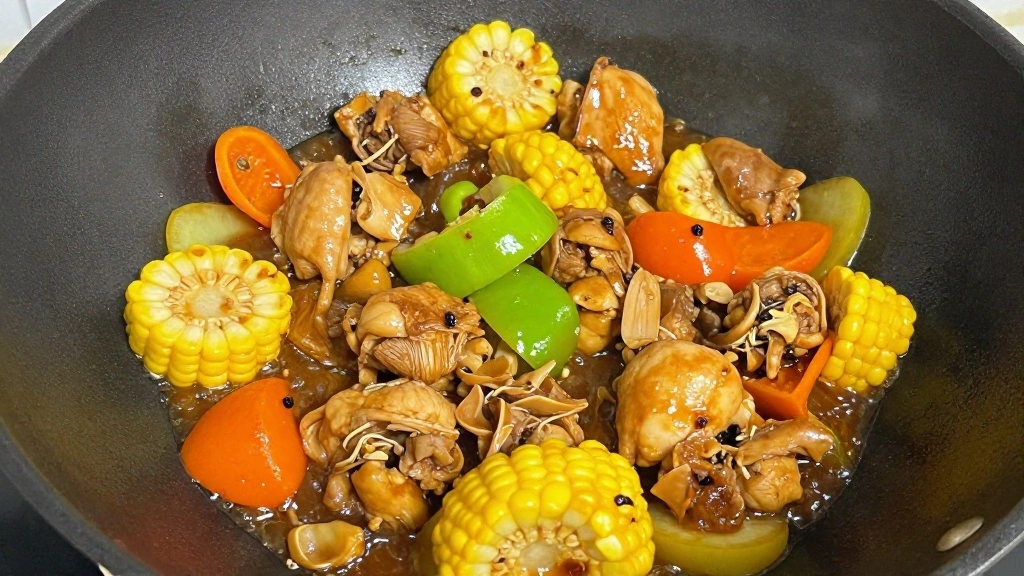
Pour the prepared sauce over the chicken and vegetables.
Toss everything together to ensure an even coating of sauce.
Cook for an additional 2-3 minutes until flavors meld.


Step 7: Add the Basil
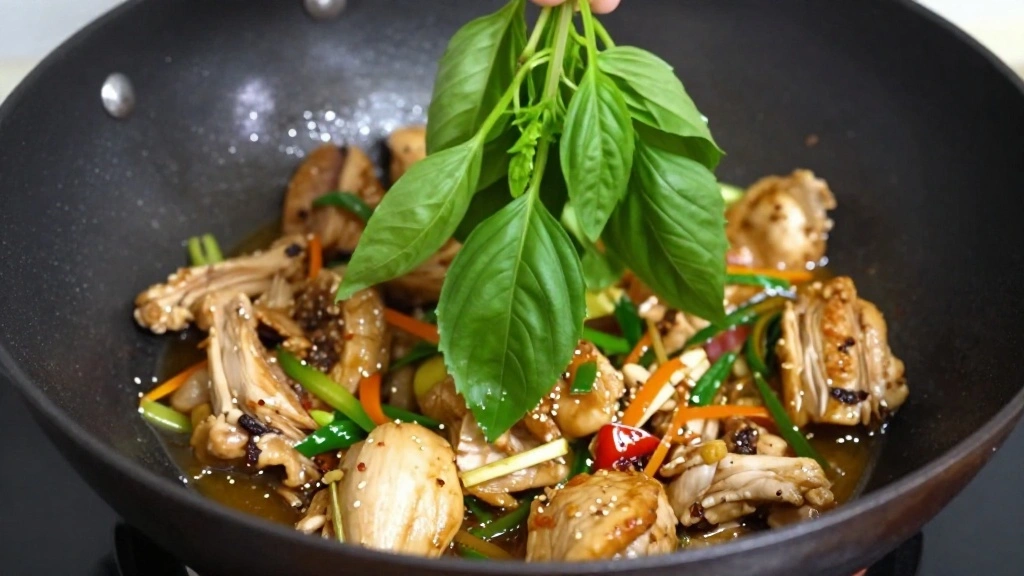
Gently toss the leaves with the other ingredients.
The residual heat will wilt the basil without cooking it too much.
Ensure the basil is evenly distributed throughout the dish.
Step 8: Serve the Dish
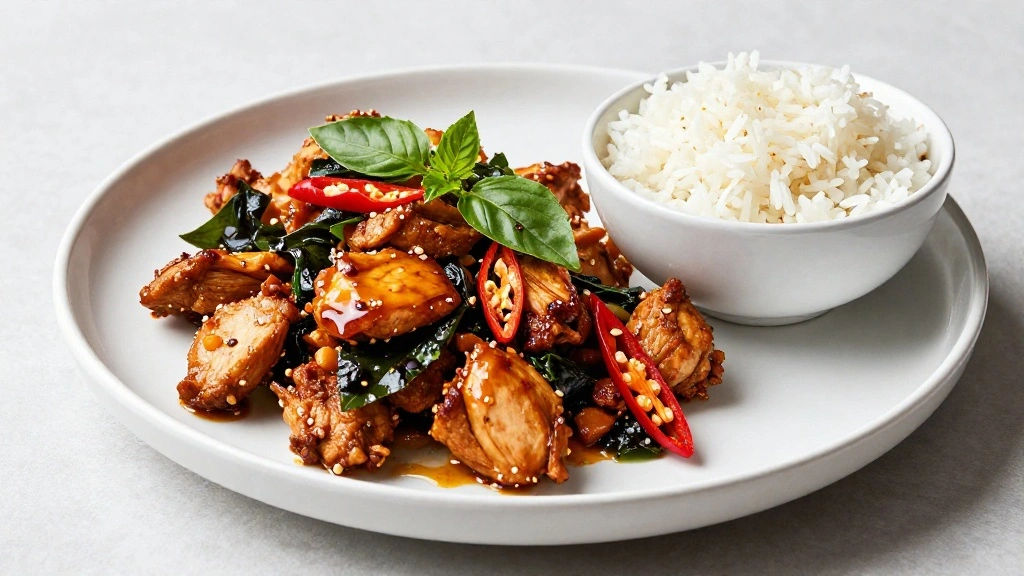
Garnish with additional basil leaves and sliced chilies for presentation.
Serve immediately with steamed jasmine rice on the side.
Enjoy the dish while hot for the best flavor experience.
Critical Timing and Temperature Guide
Sauce Thickening: Cook the sauce with the chicken for 2-3 minutes until it slightly thickens and coats the ingredients. Too much liquid will cause the dish to be watery. Adjust heat to maintain a simmer.
Basil Addition: Add Thai basil after turning off the heat to preserve its fresh aroma. Overcooking basil can result in loss of flavor and color. Toss gently to combine.
Pro Tips for Thai Basil Chicken
• Preparation Secret: Briefly marinate the chicken in soy sauce before cooking to enhance flavor absorption.
• Temperature Management: Ensure the wok is preheated to a high temperature to achieve the ideal stir-fry texture without overcooking the chicken.
• Texture Enhancement: Cut chicken into uniform thin slices to ensure even cooking and tender results.
• Flavor Layering: Crush garlic and chilies together to release essential oils that deepen the dish’s flavor.
• Make-Ahead Strategies: Prepare the sauce and slice the chicken ahead of time, storing them separately in the refrigerator for up to 24 hours.
• Restaurant-Quality Finishing Touches: Garnish with fresh basil and a squeeze of lime juice for a bright, fresh finish.
• Equipment Optimization: Use a high-quality non-stick wok to prevent sticking and ensure even cooking.
Troubleshooting Common Issues
• Sauce Too Watery: Often caused by overcooking or not allowing the sauce to reduce. Ensure the heat is maintained and the sauce ingredients are well-balanced.
• Flavors Unbalanced: Happens when one ingredient overpowers others; adjust the amount of soy sauce and sugar to achieve harmony.
• Burnt Garlic: This results from cooking garlic at too high a temperature or for too long. Add garlic just as oil begins to shimmer and stir constantly.
• Basil Lacks Flavor: If the basil is added too early, it will lose its aroma. Always add basil last, off the heat, to preserve its freshness.
Variations and Regional Differences
• Isaan Variation: Utilizes a mix of fish sauce and lime juice for a tangier profile, often with ground chicken instead of sliced.
• Street Food Style: Often spicier and served with a fried egg on top, enhancing the richness and offering a textural contrast.
• Vegetarian Version: Replaces the chicken with tofu or mushrooms and omits fish sauce, using soy sauce as the primary seasoning.


Food Science Behind the Recipe
• Emulsification: The sauce ingredients emulsify during cooking, creating a smooth, even coating on the chicken and vegetables.
• Heat Transfer: Stir-frying relies on efficient heat transfer, achieved by using a wok that allows for even and intense heat distribution.
Frequently Asked Questions
Can I substitute Thai basil with regular basil? While regular basil can be used, it won’t provide the same spicy, anise-like flavor as Thai basil.
How can I make the dish less spicy? Reduce the number of red chilies or remove the seeds before slicing to lower the heat level.
What’s the best way to store leftovers? Store in an airtight container in the refrigerator for up to 2 days; reheat gently to preserve texture.
Can this dish be made gluten-free? Yes, use gluten-free soy sauce and omit or find a gluten-free oyster sauce alternative.
Why is my chicken dry? This typically results from overcooking; ensure chicken slices are uniform and cooking time is not exceeded.
What can I serve with Thai Basil Chicken? It pairs excellently with jasmine rice or rice noodles to soak up the flavorful sauce.
Serving and Presentation Guide
• Modern Plating: Use a ring mold to shape rice into a neat circle on the plate, and arrange the chicken and vegetables around it for an elegant presentation.
• Street Food Style: Serve in a bowl with a fried egg on top, drizzling with extra sauce and garnishing with crispy shallots.
• Family Style: Present on a large platter for sharing, with rice served separately to allow guests to help themselves.


Conclusion
Its quick cooking time and vibrant taste make it a favorite for both busy weeknights and special occasions.
I encourage you to try this recipe and experience the authentic taste of Thailand in your own kitchen.