


Char Siu Recipe Chinese BBQ Pork Made Easy
1/4 cup soy sauce
1/4 cup hoisin sauce
2 tablespoons honey
1 tablespoon Chinese five-spice powder
1/2 teaspoon red food coloring
2 pounds pork shoulder
2 tablespoons honey
PT60M
4 servings
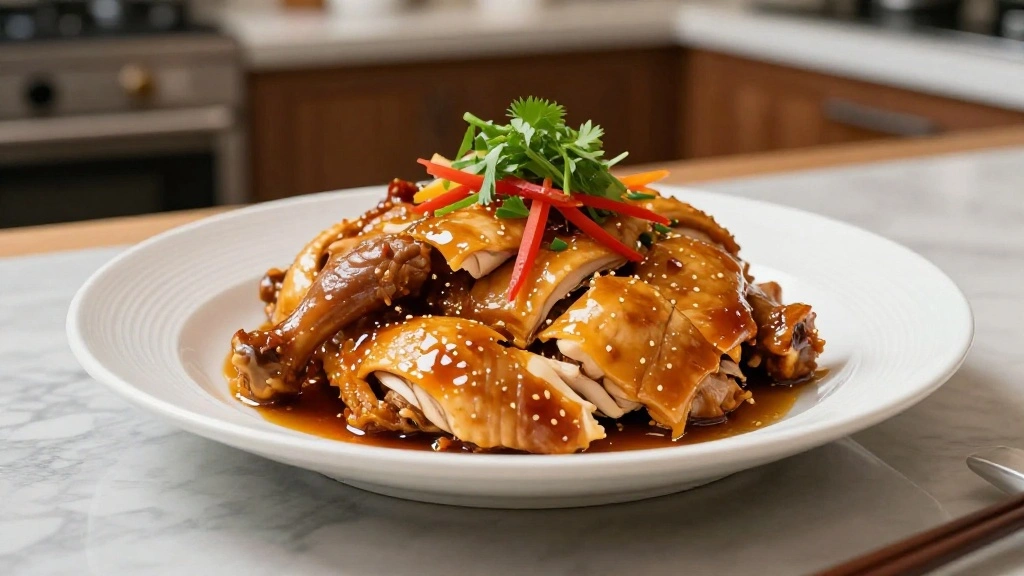
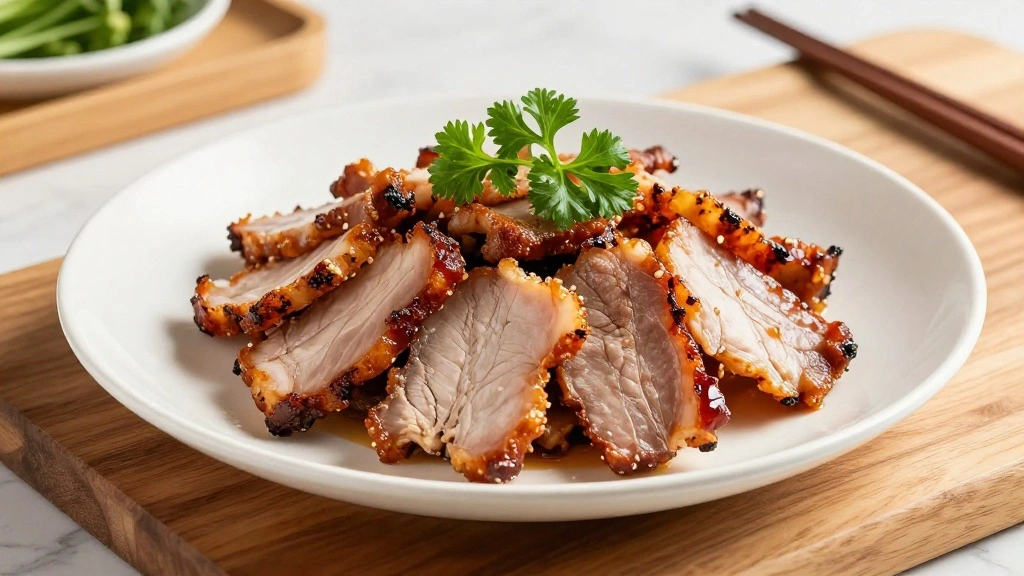
Char Siu, a beloved Chinese barbecue pork, offers an irresistible combination of sweet, savory, and smoky flavors.
This dish is known for its glossy, caramelized exterior and tender, juicy interior.
The harmonious balance of honey, soy sauce, and five-spice powder creates a memorable dining experience that will have everyone asking for your secret.
Whether you’re preparing a casual family dinner or hosting a special celebration, this Char Siu recipe delivers impressive results with straightforward preparation.
Its appeal lies in the simple yet sophisticated melding of flavors that transform humble pork into a delicacy.
Get ready to impress your taste buds and your guests with this easy-to-follow recipe for Chinese BBQ Pork.
The History and Cultural Significance
• Char Siu traces its origins to ancient Cantonese cuisine, where it was originally created by skilled chefs in Southern China.
• The dish evolved over decades as local ingredients and techniques changed, eventually becoming the beloved version we know today.
• In Chinese culture, this dish traditionally appears at New Year celebrations and family gatherings, symbolizing prosperity and togetherness.
• While many variations exist across different regions, the authentic version maintains a distinct red hue and sweet glaze that sets it apart from imitations.


Recipe Overview
Nutritional Information (per serving)
Essential Equipment Guide
Oven with Broiler: An oven with a broiler is crucial for achieving the caramelized exterior. While grilling can be an alternative, the broiler provides consistent heat from above. Look for an oven with a high-temperature broiler setting for best results.
Meat Thermometer: Ensuring the pork reaches the correct internal temperature is vital for food safety and tenderness. A digital meat thermometer offers precision and ease of use.
Basting Brush: A good-quality basting brush helps evenly apply the glaze. Silicone brushes are easy to clean and distribute the glaze without absorbing it.


Ingredients
For the Marinade
| Amount | Ingredient | Notes |
|---|---|---|
| 1/4 cup | soy sauce | provides salty depth |
| 1/4 cup | hoisin sauce | adds sweetness |
| 2 tablespoons | honey | for caramelization |
| 1 tablespoon | Chinese five-spice powder | imparts traditional flavor |
| 1/2 teaspoon | red food coloring | optional, for authentic color |
For the Pork
| Amount | Ingredient | Notes |
|---|---|---|
| 2 pounds | pork shoulder | trimmed of excess fat |
For the Glaze
| Amount | Ingredient | Notes |
|---|---|---|
| 2 tablespoons | honey | for a glossy finish |


Preparation Methods
Marinating: Marinating the pork overnight allows the flavors to penetrate deeply, resulting in a more flavorful dish. Use a resealable plastic bag to ensure the marinade coats the meat evenly. Rotate the bag occasionally for even distribution.
Broiling: Broiling the pork towards the end of cooking caramelizes the sugars in the glaze, creating the signature charred edges. Position the rack close to the broiler and watch carefully to prevent burning.
Basting: Basting the pork with the glaze during cooking ensures a shiny, flavorful coating. Apply the glaze every 10 minutes, using a light hand to avoid washing away the marinade.

Step 1: Prepare Marinade
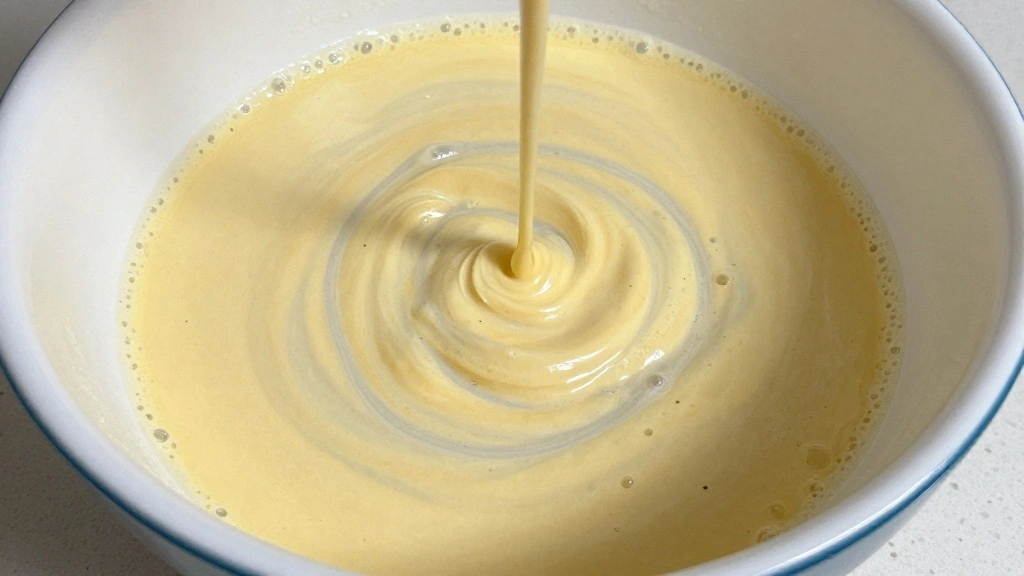
In a medium bowl, combine soy sauce, hoisin sauce, honey, Chinese five-spice powder, and red food coloring.
Whisk until all ingredients are thoroughly mixed.
Ensure the mixture is smooth with no lumps.
Taste and adjust sweetness or saltiness as desired.


Step 2: Marinate Pork
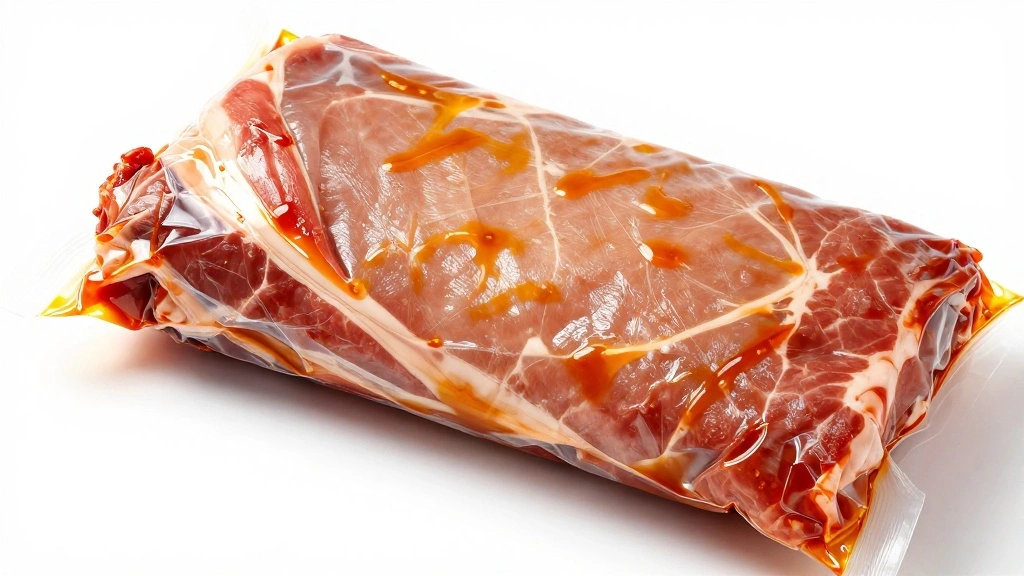
Place the pork shoulder in a resealable plastic bag.
Pour the marinade over the pork, ensuring it is fully covered.
Seal the bag and refrigerate for at least 8 hours or overnight.
Turn the bag occasionally to redistribute the marinade evenly.
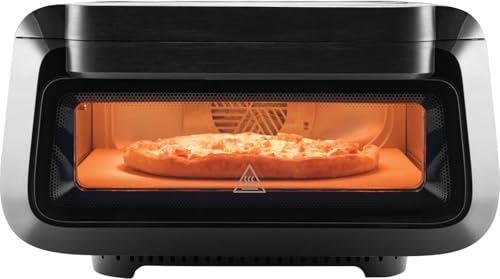
Step 3: Preheat Oven
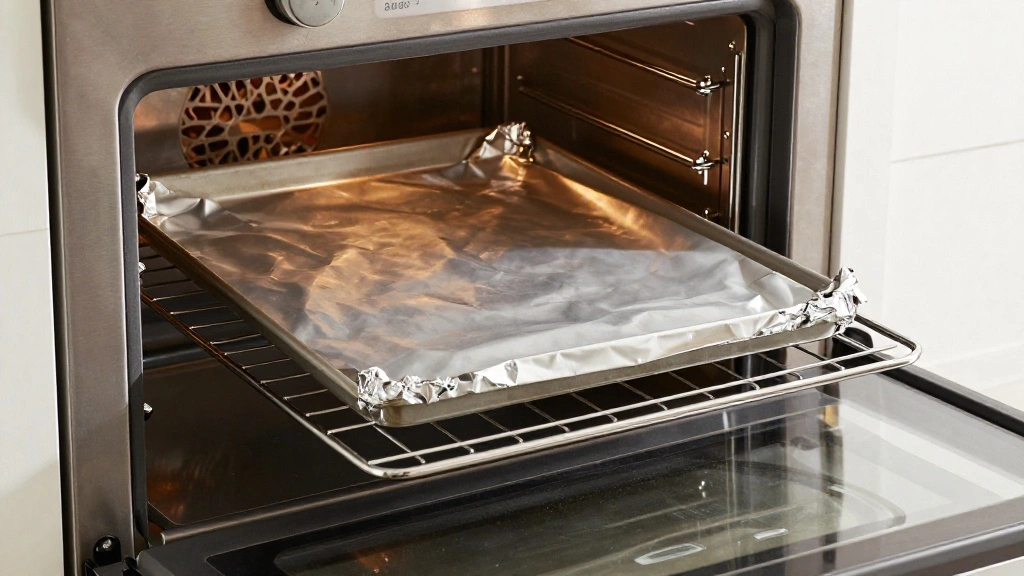
Preheat your oven to 375°F (190°C).
Ensure the oven rack is positioned in the middle.
Prepare a baking sheet lined with aluminum foil.
Place a wire rack on top of the baking sheet for even heat circulation.

Step 4: Arrange Pork on Rack
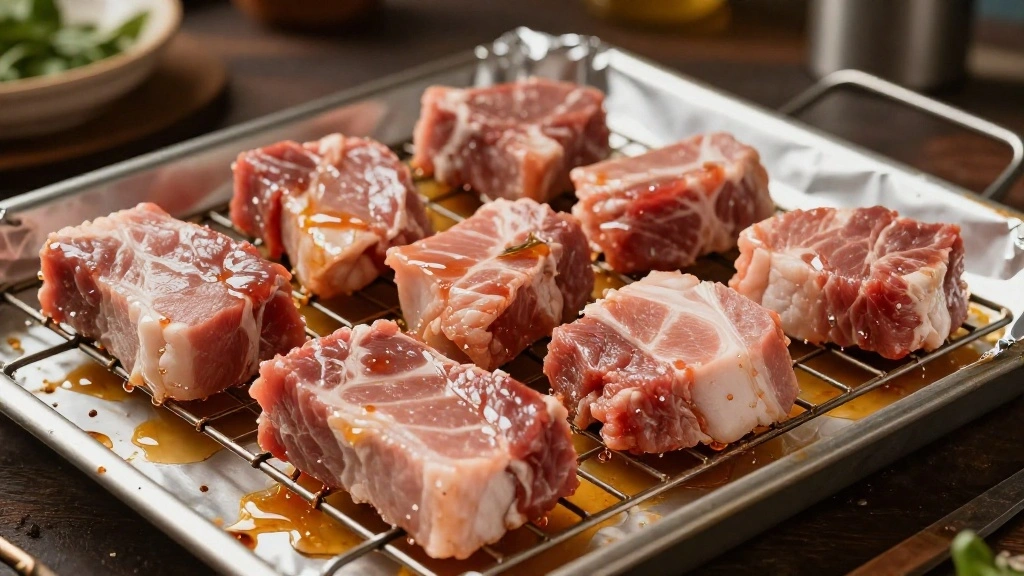
Remove the pork from the marinade, letting excess drip off.
Place the pork on the wire rack.
Reserve the leftover marinade for basting.
Ensure the pork pieces are not touching for even cooking.
Step 5: Roast Pork
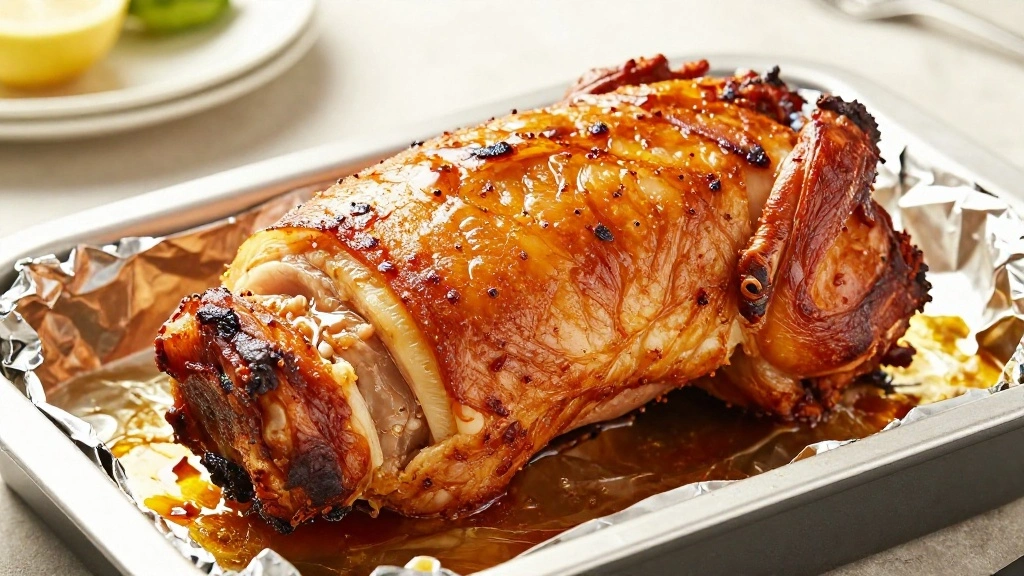
Place the baking sheet in the preheated oven.
Roast the pork for 25 minutes, turning once halfway.
Check for even browning on all sides.
Adjust the position if necessary to ensure even cooking.

Step 6: Baste with Glaze
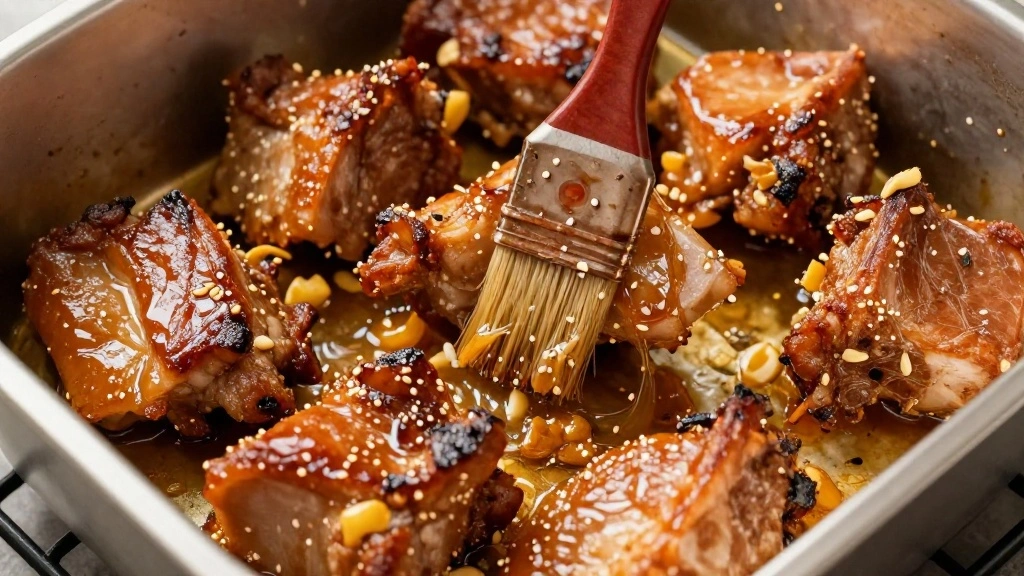
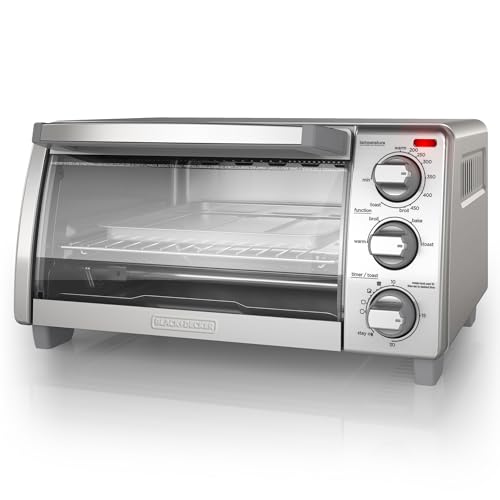
Remove the pork from the oven and increase the temperature to broil.
Brush the pork generously with reserved marinade.
Return the pork to the oven under the broiler.
Baste every 5 minutes for an additional 10-15 minutes.
Step 7: Check for Doneness
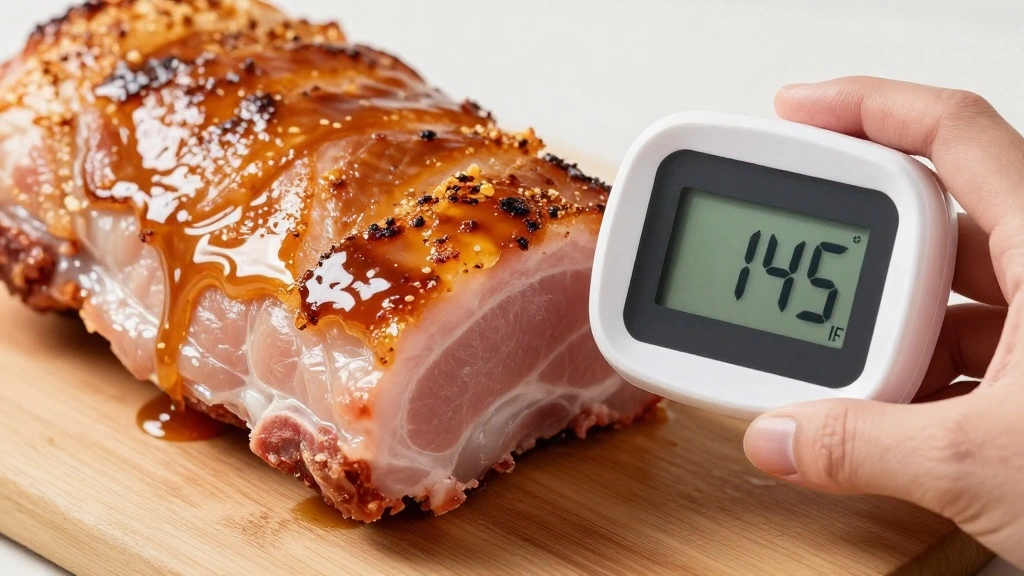
Use a meat thermometer to check the internal temperature.
Ensure the pork reaches at least 145°F (63°C).
Look for a caramelized, slightly charred exterior.
If needed, broil for an additional 2-3 minutes.
Step 8: Rest and Slice
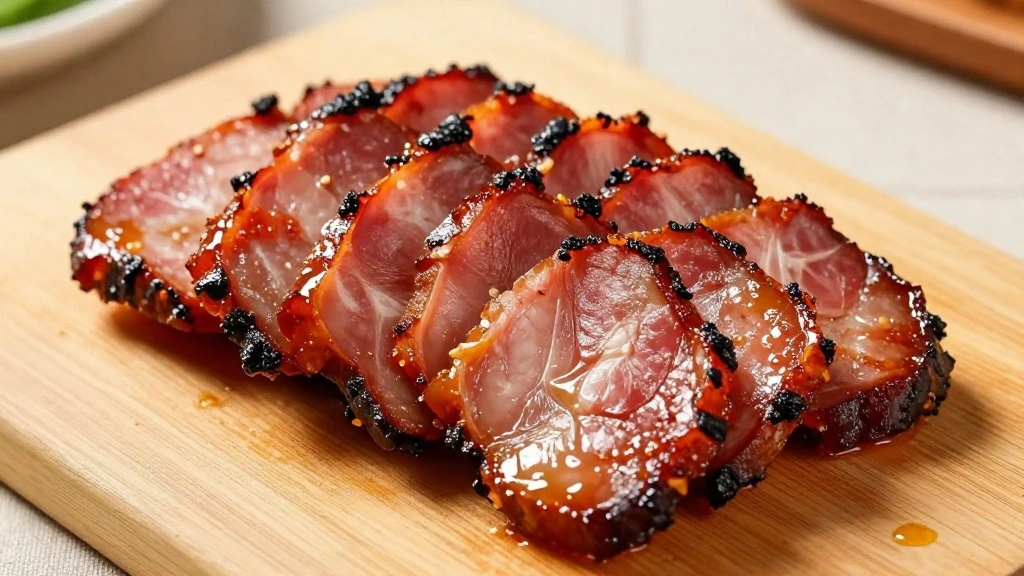
Remove the pork from the oven and let it rest for 10 minutes.
Resting allows the juices to redistribute for a tender texture.
Slice the pork against the grain into thin pieces.
Serve immediately for best flavor and texture.


Critical Timing and Temperature Guide
Marinating: Allow at least 8 hours for marinating to ensure deep flavor penetration. Common mistake: under-marinating results in less flavorful meat.
Roasting: Roast at 375°F (190°C) for 25 minutes, turning once. Visual indicator: golden brown, even color. Avoid overcrowding the pan.
Broiling: Broil for 10-15 minutes, basting every 5 minutes. Look for a shiny, caramelized surface. Watch closely to prevent burning.
Pro Tips for Char Siu Recipe
• Ingredient Selection: Choose pork shoulder for its balance of meat and fat, ensuring a juicy and tender result.
• Preparation Secret: Adding a hint of red food coloring gives the pork its iconic appearance but can be omitted for a more natural look.
• Temperature Management: Let the pork reach room temperature before roasting for even cooking.
• Texture Enhancement: Rest the pork after cooking to allow juices to redistribute, resulting in a more tender texture.
• Flavor Layering: Baste with the glaze multiple times during broiling to build layers of flavor and achieve a glossy finish.
• Make-Ahead Strategies: Marinate the pork up to 24 hours in advance and store in the fridge.
• Restaurant-Quality Finishing Touches: Garnish with sesame seeds or chopped scallions for a professional presentation.
• Equipment Optimization: Use a wire rack during roasting to allow heat circulation and prevent soggy bottoms.


Troubleshooting Common Issues
• Texture Too Dry: Caused by overcooking. Recognize by a tough exterior. Prevent by monitoring internal temperature closely.
• Flavors Unbalanced: Results from incorrect marinade ratios. Adjust sweetness or saltiness by taste before marinating.
• Uneven Browning: Caused by uneven heat distribution. Ensure proper oven rack placement and use a wire rack.
• Burnt Exterior: Occurs when broiling for too long without basting. Prevent by staying attentive and basting frequently.
• Insufficient Glaze: Caused by not basting enough. Remedy by applying glaze generously and frequently during broiling.
Variations and Regional Differences
• Hong Kong Style: Uses maltose in the glaze for a thicker, shinier finish and is often served with rice or noodles.
• Sichuan Variation: Incorporates Sichuan peppercorns for a spicy kick, altering the traditional sweet profile.
• Thai Adaptation: Includes fish sauce and palm sugar in the marinade, reflecting local tastes and ingredients.
• Vietnamese Version: Often called ‘Xa Xiu,’ features added garlic and serves the pork with pickled vegetables and rice.


Food Science Behind the Recipe
• Maillard Reaction: This chemical reaction between amino acids and reducing sugars gives the pork its characteristic flavor and brown color.
• Marinade Penetration: The acidity and salinity in the marinade help tenderize the meat by breaking down proteins.
• Temperature Gradient: Resting the meat after cooking allows the internal temperature to stabilize, ensuring juiciness and tenderness.
Frequently Asked Questions
What’s the most common mistake people make when preparing Char Siu? Overcooking the pork or failing to monitor the broiling process closely, leading to a dry or burnt exterior.
Can I use a different cut of pork? Yes, pork loin can be used for a leaner option, but it may result in a less juicy texture.
Is the red food coloring necessary? It’s optional for visual appeal, but doesn’t affect the taste.
How can I store leftovers? Store in an airtight container in the refrigerator for up to three days or freeze for longer storage.
Can Char Siu be cooked on a grill? Yes, grilling adds a smoky flavor but requires careful monitoring to prevent burning.
What sides pair well with Char Siu? Serve with steamed rice, pickled vegetables, or stir-fried greens for a balanced meal.
How do I achieve the perfect glaze? Frequent basting during broiling helps build up a thick, shiny layer of glaze.
Serving and Presentation Guide
• Traditional Presentation: Serve sliced Char Siu on a platter, garnished with sesame seeds and chopped scallions.
• Casual Hosting: Arrange slices in a fan shape with a side of dipping sauce for easy sharing.
• Family Style: Serve alongside a large bowl of steamed rice and vegetables for a communal meal.
• Modern Plating: Use a rectangular plate, placing slices in a neat row with a drizzle of glaze for a sophisticated look.


Conclusion
With its rich history and delicious flavor profile, Char Siu is a dish that brings joy to any table.
This easy-to-follow recipe ensures you can recreate this Chinese classic in your own kitchen with confidence.
Whether for a family dinner or a special occasion, the delightful taste and aroma of Char Siu will undoubtedly make it a favorite.
Give this recipe a try and experience the authentic taste of Chinese BBQ Pork right at home.